

OpenAI Just Opened a New Front Against Google, Meta and Amazon
A quiet rollout with consequences for search, ads, retail and cloud infrastructure.

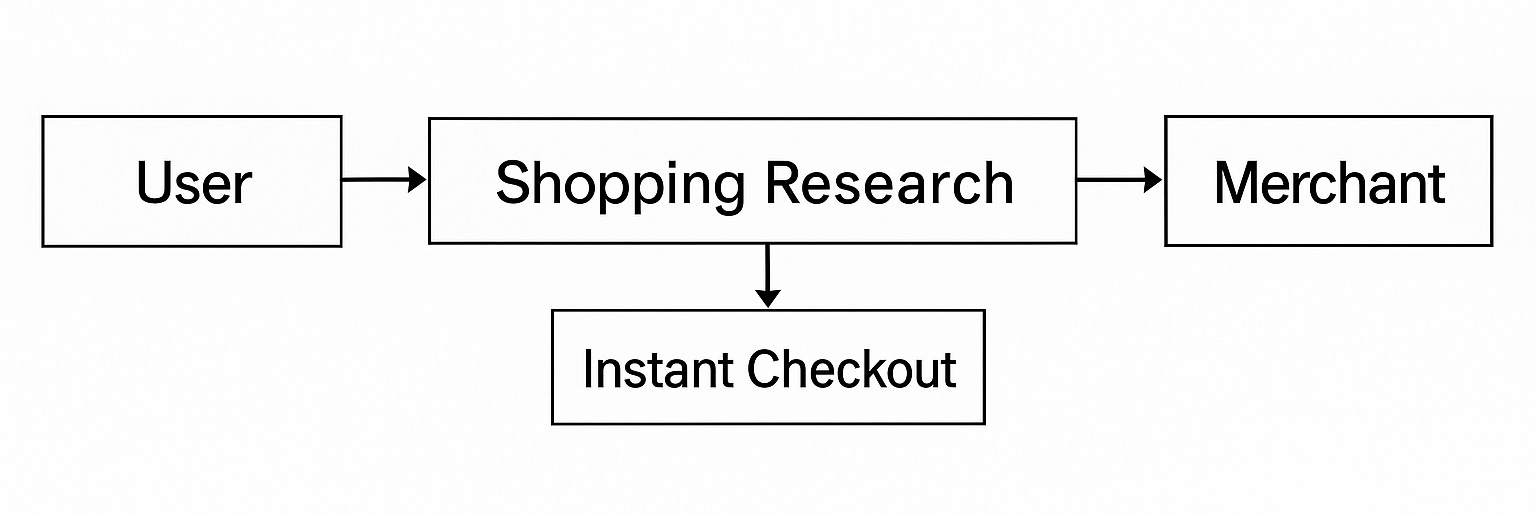
Today a small interface element appeared inside ChatGPT that is far more important than it looks. The assistant triggered a Shopping Research workflow in response to a standard product query. It did not ask for permission. It did not present itself as a beta. It simply acted.
This was not a glitch. It was the first visible step in a new strategic direction that OpenAI has been quietly building for months. The timing is significant because it arrives one day after the news that Meta is considering long term access to Google’s TPU infrastructure. When large platforms reposition, subtle signals start to matter.
OpenAI technically announced Shopping Research two days ago, but today was the first time it activated automatically inside ChatGPT in a real-world query. The activation is more important than the announcement.Below is the full analysis of why this single feature may influence the future of search, commerce, AI assistants and the competitive balance across the industry.

1. Shopping Research is the first commercial surface of a deeper strategy
The assistant has crossed an invisible line. It is no longer replying to queries. It is resolving intent.
Shopping Research is not a convenience tool. It is the entry point into:
• product discovery
• comparison flows
• transactional intent
• integrated commerce
• structured recommendation logic
This is what Google Search monetizes.
This is what Meta monetizes.
This is what Amazon monetizes.
And now OpenAI is positioning ChatGPT inside the same revenue pool.
Most users will miss the significance because it is buried behind an innocuous UI trigger. Strategically, it marks the moment ChatGPT begins shifting from a generative model into a commercial interface.
2. This feature is built on months of infrastructure work that went unnoticed
OpenAI has recently rolled out a set of partnerships that form a complete commerce backend.
• Etsy integration: access to marketplace inventory and metadata
• Shopify integration: access to product catalogs, merchants and storefront logic
• PayPal integration: access to payment workflows and transaction identity
Individually, these looked like minor additions. Combined, they create:
• a catalog layer
• a payments layer
• a merchant layer
• a product availability layer
• a user purchase history context
These are the pieces required to build an Everything App. Shopping Research is simply the first user facing manifestation of this architecture.
This is the same pattern Facebook followed in 2014 to build its ads machine and the same pattern Amazon followed in 2005 to build its product graph. OpenAI is reconstructing the core components of consumer internet infrastructure, but inside an AI assistant rather than a browser.

3. The timing is not random
This test appeared when The Information reported that Meta is exploring the use of Google TPUs in 2027 and may rent TPU hours from Google Cloud next year. That development, if real, strengthens the Google–Meta axis and threatens the strategic position of the Microsoft–OpenAI ecosystem.
In this context, OpenAI has strong incentives to accelerate monetization:
• reduced reliance on Microsoft
• a new revenue engine not tied to API volume
• independence from hyperscaler infrastructure cycles
• improved negotiation leverage
• reinforcement of the OpenAI brand as a standalone platform
• counterweight to Google’s advantage in search and product discovery
By monetizing search-like intent inside ChatGPT, OpenAI enters the only profit pool large enough to compete directly with Google and Meta.
4. The assistant becomes the discovery layer, not the search engine
If ChatGPT continues to absorb the functions that used to live in Google Search and Meta’s ads surfaces, the dominant distribution model of the internet changes.
Three structural shifts begin to take shape:
• users discover products through dialog rather than keywords
• recommendations are generated by context rather than pages
• transactions flow through the assistant rather than external platforms
In this model:
• Google loses the entry point
• Meta loses the behavioral graph advantage
• Amazon loses the first moment of intent
• OpenAI gains a direct connection to the user
This is what makes Shopping Research significant. It is not a feature. It is a new interface to the commercial internet.
5. Perplexity’s decline highlights the strategic gravity of this shift
In parallel to these developments, Perplexity has fallen in the App Store rankings. It now sits deep in the second tier and has dropped below Copilot. The timing is uncomfortable for Perplexity because their model depends entirely on capturing search-like traffic before large platforms move in.
If ChatGPT begins integrating discovery and commerce:
• Perplexity loses room to differentiate
• user acquisition becomes harder
• retention falls
• monetization becomes constrained
• the window for AI search startups closes
The App Store data reflects the early stages of this contraction. It mirrors what happened to independent browsers once Google integrated search, ads and mobile distribution.

6. The emerging competitive landscape
Shopping Research marks the beginning of a new alignment across the largest players:
• Google pushes TPU and strengthens its cloud economics
• Meta evaluates TPU access and deepens collaboration with Google
• Microsoft needs OpenAI to monetize, not just innovate
• Amazon faces pressure as discovery shifts into assistants
• OpenAI positions itself as the commercial interface above all platforms
If ChatGPT becomes the default entry point into recommendations, research and purchases, the power dynamic changes:
• Google’s moat erodes
• Meta’s ads graph becomes less central
• Amazon loses early funnel control
• Perplexity and AI search startups face consolidation pressure
• OpenAI gains structural relevance in both information and commerce
This aligns with the idea of an Everything App. Not a super app like WeChat, but an assistant layer that sits on top of the entire commercial ecosystem.
7. Why this moment matters more than model releases
Model upgrades improve capability.
Interface shifts change markets.
Shopping Research is a small demonstration that OpenAI knows this.
If the assistant begins monetizing queries at scale, OpenAI unlocks:
• a revenue stream measured in tens of billions
• platform independence
• a defensible position in the value chain
• a way to integrate commerce, search, recommendations and automation
• a structural advantage that models alone cannot create
This is the beginning of an AI native commercial stack.
8. Conclusion
The feature appeared quietly and without an announcement, but its implications are significant. ChatGPT did something new today. It attempted to monetize a user query.
This marks the first step toward a future where the assistant becomes the primary interface for discovery, shopping, research and decision making. It represents the moment OpenAI transitions from a model company to an internet platform.
The shift is subtle and easy to overlook.
It is also one of the most important signals we have seen from OpenAI in months.
This publication is for educational and informational purposes only and does not constitute financial, investment, or trading advice. Readers are solely responsible for their own investment decisions. The author may hold positions in the securities mentioned.
Regarding the topic of the article, this analysis of OpenAI’s shift from just replying to queries to actively resolving user intent is realy spot-on. It definetly highlights how these AI systems are not just tools anymore but are becoming key players in the digital economy, reshaping everything from how we search to how we buy.
This is trove of insights man! is corporate/ecommerce strategy your daytime job =)
Is it true wayfair is on chatgpt too, always thought they were game for short until they are selling on chatgpt