

Microsoft on a Roll
This week marked a new phase in the AI infrastructure build-out. Hyperscalers are no longer renting capacity — they’re expanding ownership of compute the way the U.S. once expanded power grids.
The buildout phase of AI infrastructure has entered a new level, and Microsoft is setting the pace. The company’s latest partnership with Nscale will add roughly 200,000 NVIDIA GB300 GPUs across the U.S. and Europe — a scale that turns compute from a rented resource into a core strategic asset.
At the same time, Poolside and CoreWeave announced Project Horizon, a 2-gigawatt AI campus in West Texas built for next-generation NVIDIA Blackwell systems. The first 250 MW phase goes live in 2025, with CoreWeave supplying more than 40,000 NVL72 GB300 GPUs and expansion already planned toward 500 MW.
Adding to that momentum, a consortium including Microsoft, NVIDIA, xAI, and BlackRock is acquiring Aligned Data Centers for about $40 billion, securing over 5 GW of capacity across North and Latin America.
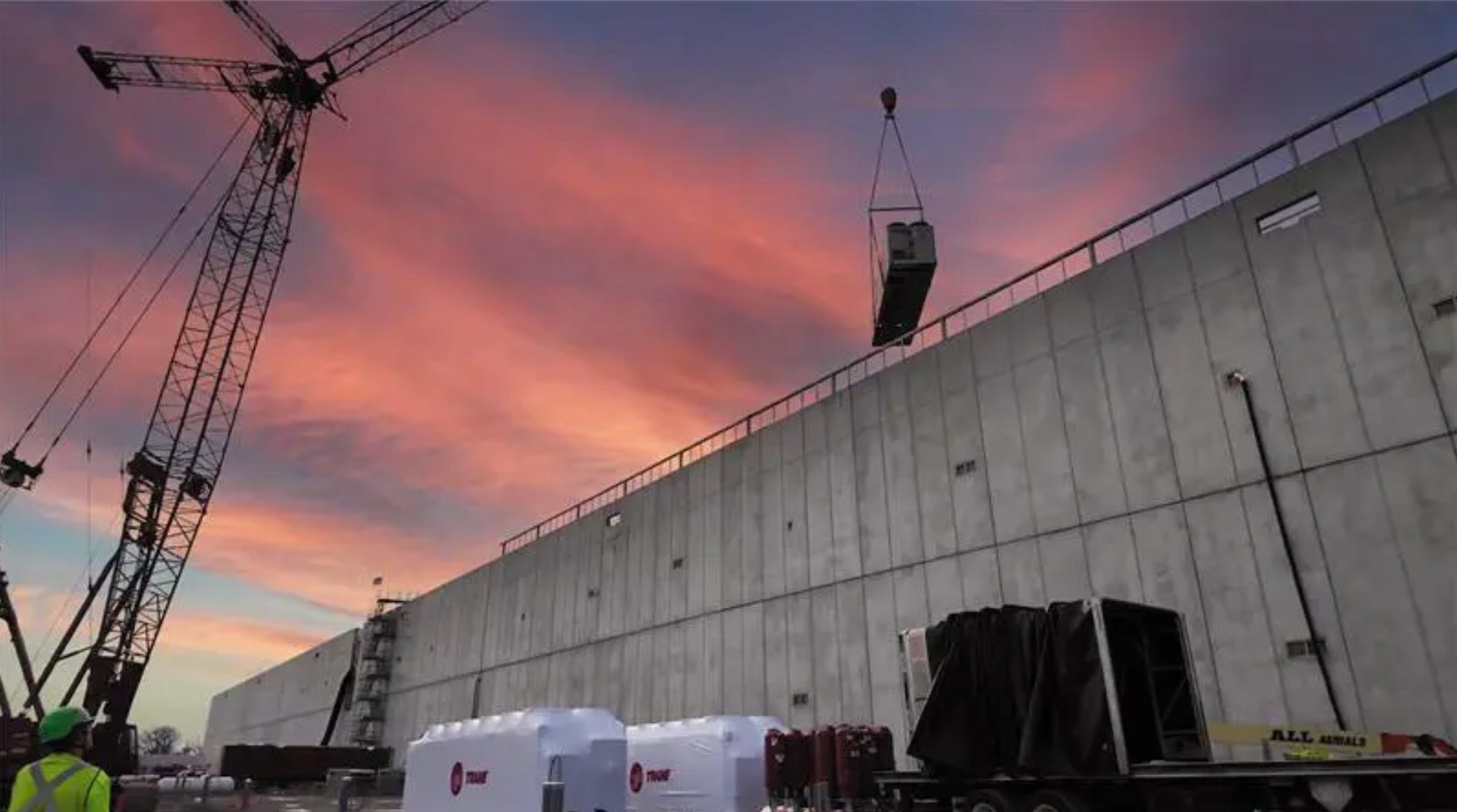
The pattern is clear: hyperscalers are no longer tenants in someone else’s data centers. They’re buying the land, the energy, and the bandwidth that make AI possible — treating compute as the new industrial infrastructure of the global economy.
It’s telling that NVIDIA has formed an alliance with its largest clients — Microsoft, BlackRock, and xAI — effectively guaranteeing long-term demand for its GPUs. This structure gives NVIDIA a locked-in sales channel at a time when AMD lacks both the capital and the partnerships to compete at the same scale. NVIDIA isn’t just selling chips anymore; it’s building the ecosystem that will consume them, shaping the entire downstream market before rivals can even catch up.

For Microsoft, these deals are just as strategic. The company is positioning itself to become the top cloud infrastructure provider, and right now, its data-center investments are performing far better than its software bets. Copilot adoption remains uncertain, but the infrastructure behind it is turning into a profit engine. Microsoft is effectively betting that owning the rails will matter more than owning the apps — and so far, that looks like the right call.
The Public Winners
The real action in this market isn’t in the trillion-dollar names — it’s in the companies building the physical layer that makes AI possible.
Iris Energy ($IREN), Cipher Mining ($CIFR), and TeraWulf ($WULF) are leading that group. All three control large-scale renewable power assets in North America and are actively converting their mining infrastructure into AI-ready data centers. IREN’s capacity exceeds 800 MW, with over 23,000 NVIDIA GPUs already deployed; Cipher is securing new long-term hosting deals tied directly to AI clients; and TeraWulf’s 200-MW hosting agreement with FluidStackcould generate more than $3.5 billion in contracted revenue over the next decade. Together, they’re becoming the backbone suppliers for the next wave of hyperscale demand.
Bitfarms ($BITF) sits just behind them. With roughly 300 MW of existing power and a recent $240 M credit facility from Macquarie, it’s starting the same transition from mining to compute hosting. The stock doubled after the news but remains far below the valuation multiples of IREN or CIFR — which leaves plenty of room if the AI pivot continues.

Galaxy Digital ($GLXY.TO) and Soluna Holdings ($SLNH) are the next layer in the chain. Galaxy is diversifying its data-center footprint, using liquidity from its trading and asset-management arms to build high-density compute sites. Soluna, meanwhile, is developing wind-powered campuses in Texas and the Midwest — small in scale but positioned for potential takeovers once power availability becomes the main bottleneck.
At the top of the pyramid are NVIDIA ($NVDA), Microsoft ($MSFT), and BlackRock ($BLK) — the financial and technological architects of this cycle. Their capital is what fuels the entire build-out, but the real upside sits with the companies turning that money into megawatts and capacity. The market is finally rewarding ownership of energy and infrastructure over narratives and software.