


We’ve all felt that bitter, hollow sensation in the pit of the stomach. You watched the setup, you did the work, but you hesitated. You told yourself the move was overextended, that AMD couldn’t possibly sustain a run to $400, and that the photonics names were pure hype. Then the market did what it does best: it proved you “right” on logic and “wrong” on price.
Now, you’re sitting there doing the “regret math”, calculating how many cars you could have bought or how much your life would have changed if you had just put $10,000 into the trade. But staring at what could have been is the fastest way to lose what you currently have.

1. The Laggard Trap (Symmetrical Expectation)
The biggest pitfall for a smart analyst is the urge to buy the “underperformer.” When AMD hits $400 and photonics names are soaring in parallel, there’s a strong temptation to find a third-tier company that hasn’t moved yet.
The Catch: In a powerful bull market, capital is hyper-selective. Leaders rise because they have the actual contracts, the chips, and the foundry allocations. Those lagging behind often lack access to these critical resources.
The Outcome: When the leaders eventually cool off, these “laggards” are usually the first to collapse, often without ever having staged a meaningful rally. Never mistake a low-quality asset for a “discounted” entry.
2. The Hero Short (Fighting the Parabola)
When an asset covers the distance to a major psychological level in days, the analytical mind screams: “This is irrational! The multiples are insane.”
The Catch: During parabolic moves, the market is driven by liquidity and forced liquidations (Short Squeezes), not fundamentals. Attempting to short such a trend is like standing in front of a high-speed train simply because your calculations suggest it’s overspeeding.
The Outcome: Market irrationality almost always outlasts your margin. Overbought conditions are a statement of fact, not a timing signal for a trade.
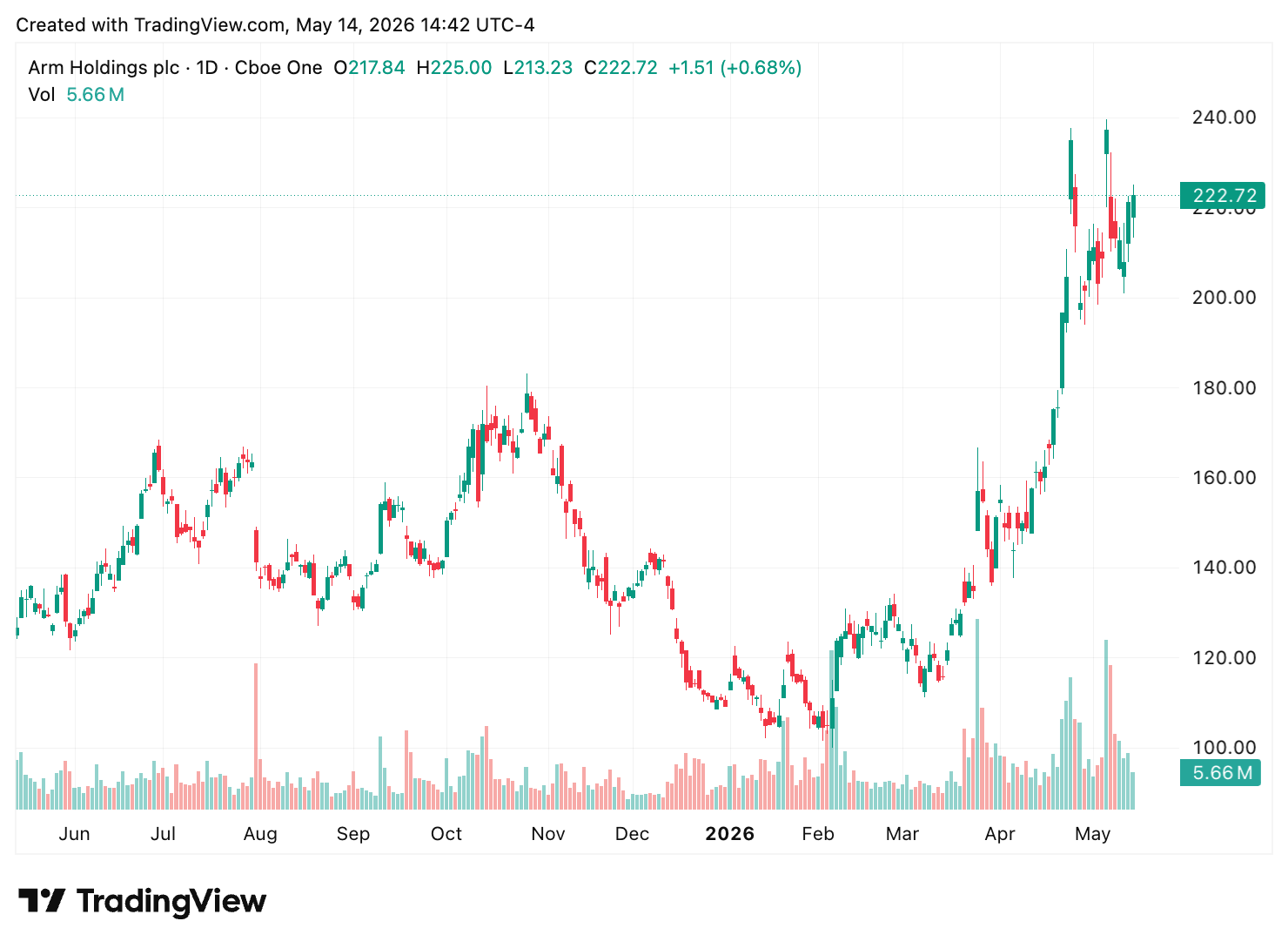
3. Kill the Anchor: The Reality of the New Range
One of the hardest psychological hurdles is letting go of “yesterday’s price.” If Marvell was $90 last month, that price no longer exists in the current market reality.
The Logic: A sharp movement often signals a regime change. You must live in the reality of the existing price range. While nothing is guaranteed - rates could rise or competitors could emerge, the chart has moved.
The Approach: It is often safer to buy a stock on a breakout and move higher than to “catch a falling knife.” Buying NVDA 0.00%↑ at $200 on confirmed momentum is a better trade than waiting for $170 while the train leaves the station.
The Tactical Play: If you can’t stomach the current price but want to participate, sell a Cash-Secured Put (CSP). It puts you in the game, allows you to get paid to wait for an entry, and keeps your skin in the game without chasing the peak.

4. The “First High-Quality Base” Strategy
The hardest part of missing a move is accepting that the current price offers no “mathematical” entry. Buying in the middle of a vertical move means you have no logical place for a stop-loss.
The Approach: Instead of chasing, you must wait for the first consolidation phase, the “High-Quality Base.” This is where the stock stops going up, moves sideways, and allows moving averages (like the 10 or 20MA) to catch up.
The Logic: Even if this new base is $10 higher than where you wanted to buy, it is a safer trade because it provides a clear level of invalidation. You aren’t trading the price; you are trading the structure.
5. The “Anti-FOMO” Micro-Position (Buying Objectivity)
Sometimes the psychological pressure of being “out” is so high that it clouds your judgment. This is where you use a tactical trick: the Information Position.
The Tactic: Buy a tiny, almost symbolic amount of the asset (e.g., 5-10% of your usual size). Just enough to “be in the game,” but not enough to hurt your portfolio if it drops.
The Logic: The moment you own a piece of the asset, your brain switches from “regret mode” to “management mode.” It satisfies the FOMO itch and allows you to watch the price action objectively. You can always average up or down once the structure clarifies.

6. Pivot: The Market Always Gives a Second Act
If you’ve missed the “Brain” (Chips) and the “Nervous System” (Photonics), stop living in the past. The market is a rotating machine. The smart move is to analyze the supply chain for the next logical beneficiary.
The Case for Robotics: We are seeing the hardware cycle evolve. If the compute is ready, the “Body” is next. This is why I have started forming positions in companies like Hyundai (via Boston Dynamics), they are already producing the physical vessels for this AI.
The Philosophy: Missing a profit is not the same as taking a loss. “Paper gains” you didn’t make don’t exist; only the capital currently in your account is real. Focus on protecting that capital and deploying it where the risk-reward is still in your favor, not where the party has already peaked.
Missing a trade is the cost of having a disciplined system. The real mistake isn’t being on the sidelines; it’s trying to force a logic onto a market that has already moved on.
This publication is for educational and informational purposes only and does not constitute financial, investment, or trading advice. Readers are solely responsible for their own investment decisions. The author holds a positions in Hyundai at the moment of publication.
The best investors are usually not the best “writers” naturally. They are the people who spent years learning how to think clearly.
AI can help compress the editing loop, but it cannot manufacture original insight, pattern recognition, or judgment under uncertainty.
Most people overestimate the value of prose and underestimate the value of having something genuinely non-consensus to say.