


Everspin Technologies has doubled in value this year, fueled by a staggering 68% surge last Friday alone. Is there a fundamental engine driving this breakout, or is it simply a byproduct of the massive semiconductor tailwinds and the frenzy surrounding memory plays? One thing is certain: in a market obsessed with next-gen hardware, MRAM 0.00%↑is arguably the most perfectly “on-the-nose” ticker to capture investor eyeballs.
Since its IPO in 2016, the stock has essentially been flatlining, stuck on a multi-year plateau while the rest of the tech world moved through various cycles. That stagnation ended abruptly this year. But to understand why the market is suddenly paying attention, we first need to look at what they actually do.
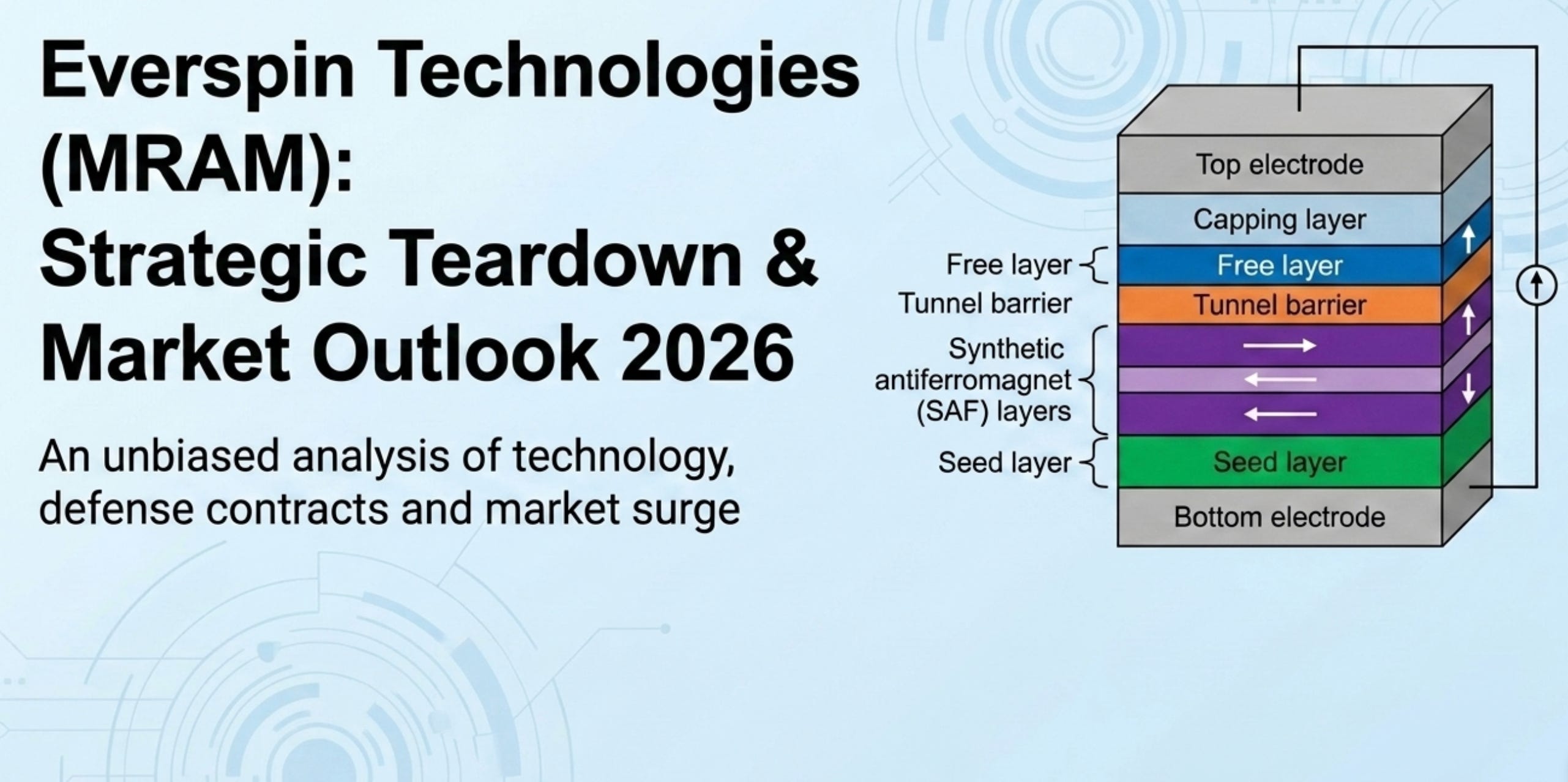
The Tech: What makes Everspin different?
Everspin is the global leader in Magnetoresistive RAM (MRAM). Unlike traditional DRAM (which is fast but loses data when power is cut) or NAND Flash (which saves data but is slow and wears out), MRAM is a “universal memory.” It uses magnetic states to store data, making it non-volatile (it remembers without power), incredibly fast, and virtually indestructible in terms of write endurance.
The Use Case: Where is it actually used?
Currently, they dominate high-stakes niches where failure isn’t an option:
Aerospace & Defense: Their chips are radiation-hardened, making them the standard for satellites and military hardware.
Industrial Automation: Used in factory robots and power grids that need to save their “state” instantly during a power failure.
Data Center Buffering: In high-end storage arrays, MRAM acts as a “write cache,” protecting critical data logs before they are moved to slower, permanent storage.
While the 2016-2024 era was about survival and perfecting the tech in these small niches, the 2026 breakout suggests the market is betting on MRAM finally moving into the AI mainstream, either as a replacement for SRAM in AI chips or as a critical component in the U.S. government’s push for domestic semiconductor sovereignty.
The Data Center Connection: Riding on IBM’s Shoulders
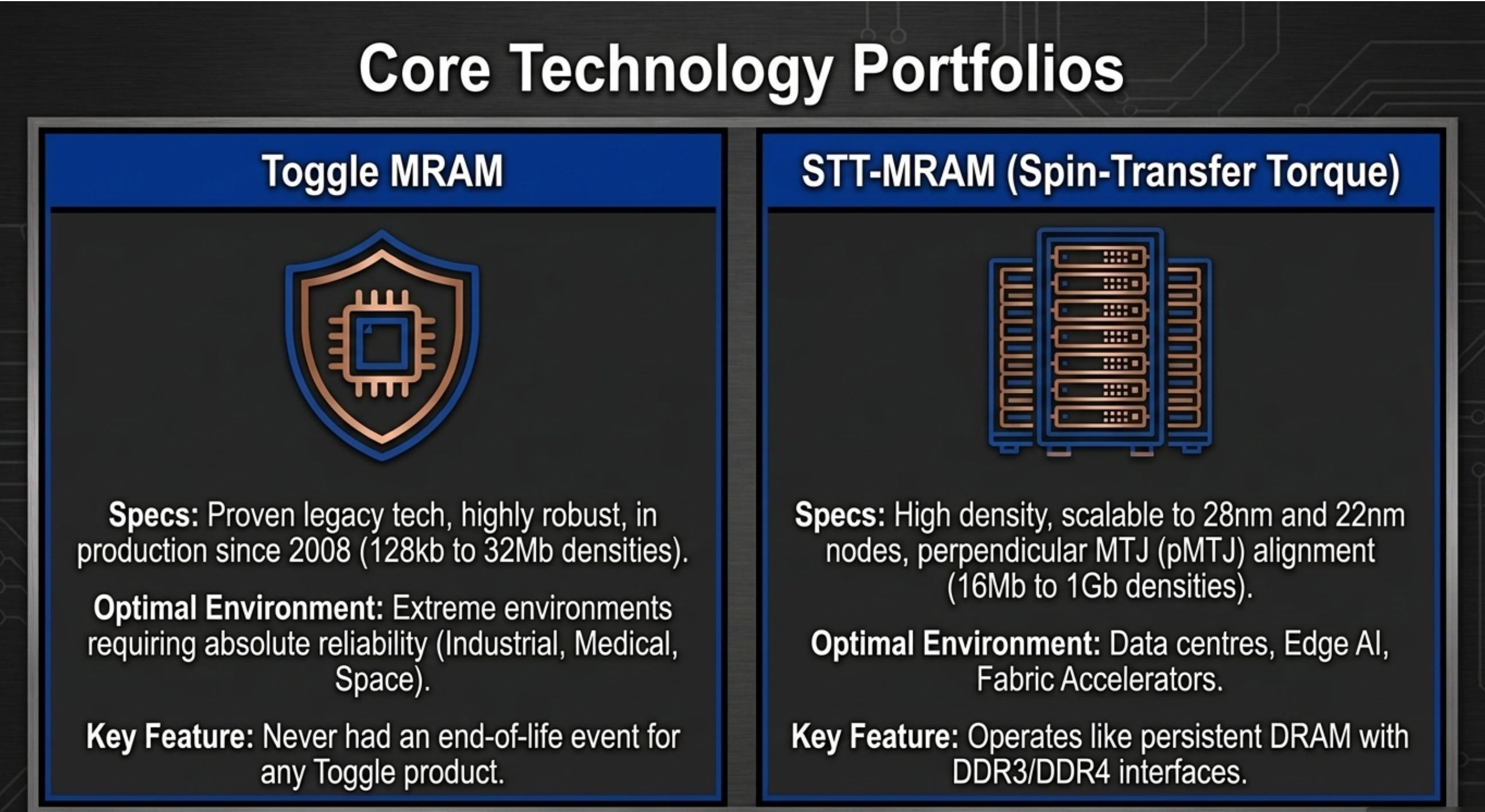
If Everspin has any footprint in the high-end data center market, it’s not because Amazon or Google are buying from them directly. Instead, Everspin acts as a sub-component supplier for storage giants, most notably IBM.
In IBM’s FlashSystem storage arrays, MRAM serves a very specific, unglamorous purpose: it’s a write cache.
The Problem: Traditional DRAM is volatile. If a data center loses power, any data sitting in the DRAM cache is vaporized before it can be written to the SSD.
The Old Solution: Massive, expensive, and unreliable battery backup modules (BBU) or supercapacitors that keep the DRAM alive just long enough to dump data to a disk.
The MRAM Solution: IBM uses Everspin’s chips because they are non-volatile. You can pull the plug, and the data stays exactly where it is. No batteries required.
This is a legacy solution. While it’s technically “data center technology,” it’s focused on storage reliability, not the high-speed AI processing that is driving the current market mania.