


Let’s be honest: closing a losing position is brutal, but not because you hate losing money. Money is just numbers on a screen. The real issue is that it is freaking hard to admit you were wrong.
You might have spent weeks digging through 10-Ks, reading research reports, modeling forward projections, and debating in the comments. You invested your time and your intellect into the idea. You entered the position, lived with it, married it - and then, out of nowhere, the market trend snaps you over its knee.

Right then, your brain slams the mental trap shut. Clicking “sell” means officially signing off on your own stupidity. How could this happen? The stock was trading at $100, top-tier research firms had a target of $155, and yet here you are, submissively bagholding for six months at $70.
The market is littered with these exact setups: SoFi, Robinhood, Lemonade, or a dozen other software names that retail investors camp out in for years, praying for a miracle.
When the Magic Dies: Adobe, Nike, and the Power of Perception
A textbook example playing out right now is Adobe. The company drops solid earnings. Every single quarter, they post record revenue, strong metrics, and a clean balance sheet. Yet, the market refuses to buy it. Why? Because the magic is gone. Investors no longer see a moat. Any generic chat-bot can spin up a flawless image in three seconds via a simple text prompt. You don’t even need to argue about the nuances of their enterprise business model or ARR stability. The only thing that matters is that the market’s perception of the company has fundamentally flipped. It went from being an unchallenged, innovative monopolist to a defensive incumbent with hungry startups camping on its lawn.

An even more brutal example from traditional retail is Nike. A legacy brand with a decades-old moat, or so everyone thought. But management decided to play distribution geniuses: they aggressively cut ties with wholesalers and traditional retail storefronts to force everything through their own website and app (the Direct-to-Consumer model).
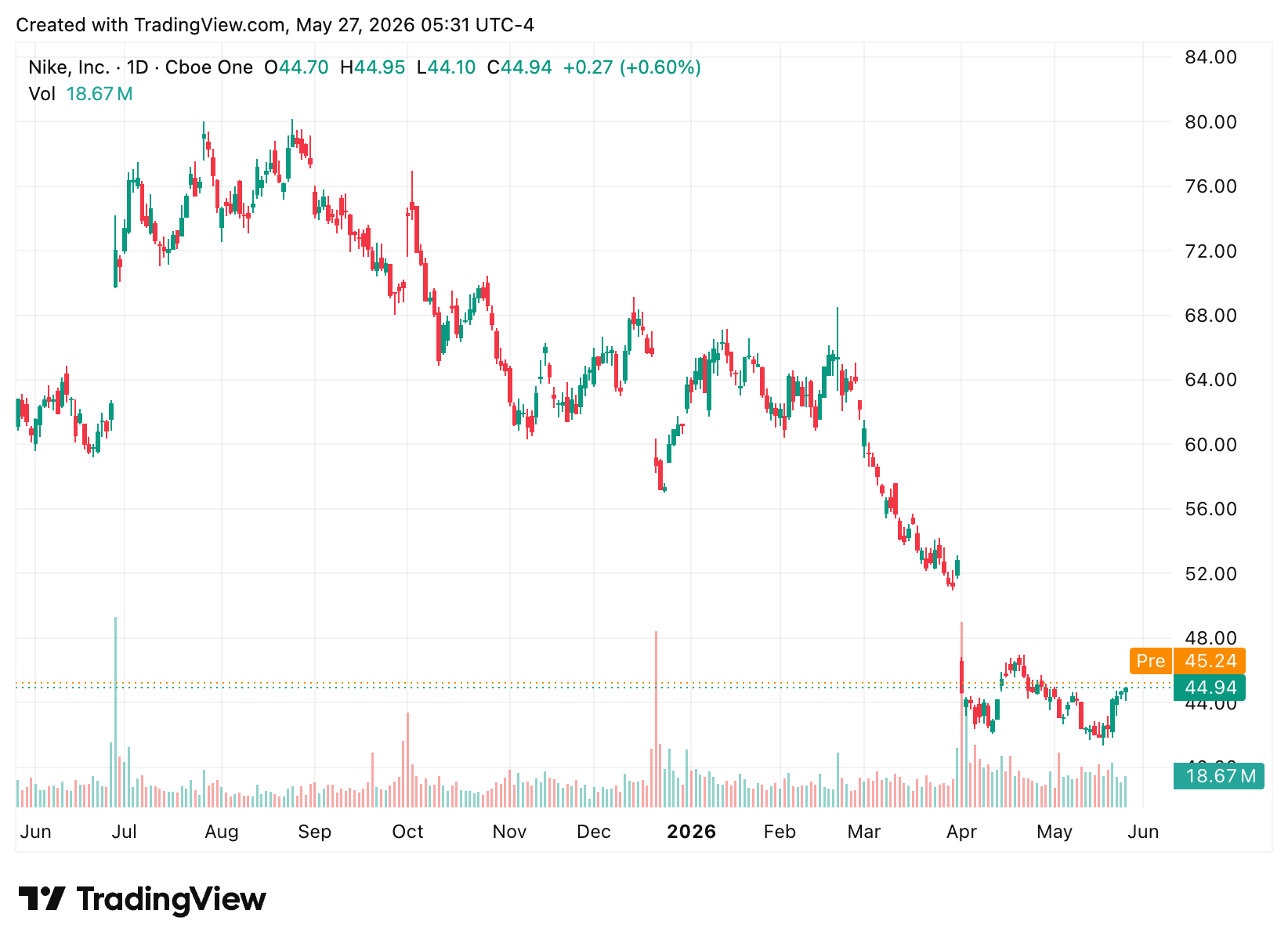
The result? They voluntarily handed over premium shelf space to young, hungry competitors like On Running and Hoka. The brand lost its obsessive focus on innovation, the product lines got stale, and the wholesale channels were left shattered. The core investment thesis - ”a permanent premium brand that dictates market terms” - broke. Retail investors who blindly bought the dip simply because “it’s Nike, it always bounces” are now sitting on massive, bleeding losses because the underlying business fundamentally degraded.
Sometimes the setup is different: a company is doing fine operationally, but all the liquidity in the market is rotating into semiconductors and AI infrastructure. Capital is flooding into names like AOSL or UMC, stocks most retail investors hadn’t even heard of three years ago back when everyone was blindly allocation-stacking the Magnificent 7. Today, the landscape has shifted.
The market is always right. You have two choices: remain an stubborn passenger in a losing position to prove a point to your monitor, or cut the loss, free up the capital, and go make money where the actual trend is running.
The Investor’s Dilemma: Price vs. Thesis
We need to make a critical distinction here. If you are trading as a pure speculator using Mark Minervini’s playbook, your life is simple: the price breaks a technical stop-loss at 7% to 8%, you cut it, forget it, and hunt for the next chart setup. But if you position yourself as a long-term investor, blindly copying that approach will chop your account to pieces on random market volatility.
For a long-term investor, a 30% or 40% drop in share price is not, on its own, a reason to sell. The only legitimate reason to sell is when your original investment thesis breaks.
When you bought the stock, you shouldn’t have just chased a green chart. You should have had a specific playbook written down: “I am buying this company because they own a unique product, their margins are expanding by 5% annually, and their primary competitor is lagging.” When the stock takes a hit, look at that playbook, not your unrealized P&L:
Thesis Intact, Price Dropped: If margins are stable, the product is clearing out, management is executing, and the stock is getting hammered purely because the broader sector is in a macro down-cycle - do not sell. This isn’t a loss; it’s a clearance sale. This is exactly where elite long-term cost bases are built. Look at Micron: it cascaded from $150 down to $80, testing the resolve of every investor on the roster, right before the market realized that global AI progress is physically impossible without their HBM chips.
Or look at how the media buried Google during the early OpenAI rollouts. The panic was so intense it looked as though the search giant was about to repeat Microsoft’s trajectory from 2010, when they completely slept on the mobile market and went stagnant for years. And make no mistake, that risk was entirely real. But instead of drifting into irrelevance, Google’s management shifted into emergency mobilization.
They declared an internal "Code Red," frantically overhauled their AI models, integrated AI overviews straight into the core search layout, and aggressively scaled up Google Cloud infrastructure. The case didn't recover on its own, investors stepped back in only when they saw that leadership was ready to fight tooth and nail. Institutional funds mapped out the forward cash flows under this new reality and bought the bottom. The business survived because management executed a timely pivot and protected their cash-printing machine.
Thesis Broken, Price Dropped: But if margins are cratering, competitors have shipped a better, cheaper product, and management is stumbling through earnings calls without answers, your thesis is dead. The business has changed. Sitting there waiting for the stock to “get back to $100” just to save your pride is financial suicide.

Look at what is happening at the top of Nike following their disappointing guidance that sent shares into a tailspin. During an internal all-hands meeting, CEO Elliott Hill flatly told employees: “I’m so tired, and I know you are too, of talking about fixing this business. I want to move to inspiring and driving growth and having fun.” He openly admitted his strategy is lagging, taking “longer, way longer than I’d like.” Simultaneously, CFO Matthew Friend noted on calls that performance isn’t meeting expectations, results are mixed, and the trajectory for the business is “stepping down.”
When the C-suite of a mega-cap giant explicitly tells you the business trajectory is stepping down and the CEO is openly exhausted from trying to patch up broken internal processes, that is your exit siren. The magic is dead, the moat is breached. Holding through that hoping to break even is a delusion.
The Sleep Test and the 3-Month Window
The ultimate red flag that a position is toxic is your sleep quality. If you are waking up in the middle of the night to frantically refresh pre-market tickers, your position sizing is wrong or you are trapped in a bad trade.
An actual portfolio cannot consist exclusively of multi-baggers. If your brain is wired to demand that every single line item in your terminal stays green so you can compete with anonymous avatars on X, you are on a fast track to blowing up your capital. Your overall P&L needs to be green over time. Period.
So when do you pull the trigger without mercy? The primary indicator is a busted earnings report combined with the clear realization that for the next three months, no institutional money is coming to buy this stock.
That three-month window (one quarter) is critical. It’s the timeframe management gets to show the street how they plan to navigate the wreckage. Strong management teams weaponize this window to go on the offensive and reclaim market confidence:
Credo responds to a vicious sell-off by instantly executing an acquisition of an Israeli tech startup to expand their hardware stack.
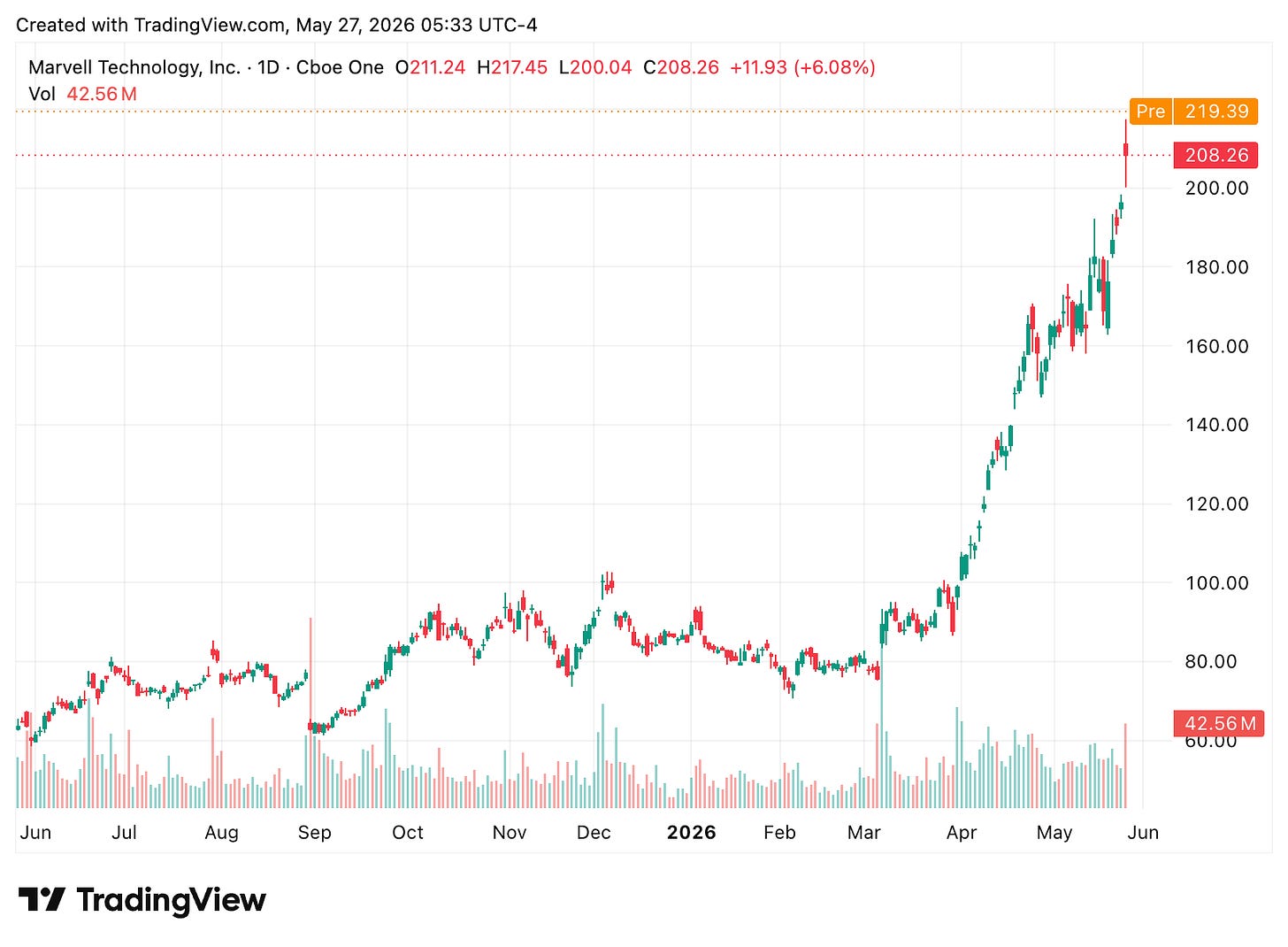
Marvell snaps up Celestial assets to lock down their footprint in the AI data center pipeline.
Created with TradingView Robinhood ruthlessly fires their head of crypto after revenue drops
If you see structural moves, M&A execution, or a sharp pivot within those three months (like Nike scrambling to repair wholesale partnerships), you can give management room to work. But if the earnings report is a disaster, the thesis is broken, and executives are just shrugging and asking for patience, cut the position.
Admit the mistake, reclaim the cash, and pivot. The market serves up fresh opportunities every single day, but they are only accessible to players who keep their capital liquid and their heads completely free of illusions.
Actionable Blueprint: The Evacuation Protocol
If a specific ticker in your portfolio flashed through your mind while reading this article, stop hoping. Engage cold logic and run this three-step protocol right now:
Step 1: The Clean Sheet Test. Ask yourself: “If I did not own this position today, but had the exact same amount of cash sitting in my account, would I buy this stock right now at current prices?” If the answer is an honest no, move to Step 2.
Step 2: Scale out via Micro-Sizing. If cutting the entire block at once triggers too much emotional resistance, do it in tranches. Sell exactly 30% of the position today. The moment you hit the button and free up that first block of capital, your psychological bias resets. You realize the world didn’t end, and your brain regains objective clarity.
Step 3: Immediate Re-allocation. Do not leave that cash sitting idle on your balance sheet, or you’ll be tempted to buy another falling knife. Immediately re-route that capital into a high-conviction, structural trend where margins are scaling, earnings are acceleration-primed, and institutional volume is actively buying. Make your money work for your P&L, not for your ego.
This publication is for educational and informational purposes only and does not constitute financial, investment, or trading advice. Readers are solely responsible for their own investment decisions. The author holds positions in Robinhood, Micron, Credo and Google