

The recent wave of convertible debt offerings from AI infrastructure providers marks a fundamental shift in how the market evaluates this sector. IREN’s $2.3 billion raise at a blended 0.625% coupon and CoreWeave’s $2+ billion offering reportedly pricing between 1.5-2% according to market sources both closed with strong institutional demand, greenshoes fully exercised. These aren’t isolated capital raises—they represent the entire NeoCloud sector transitioning from the romance phase of capacity announcements to the hard reality of actually building infrastructure at scale.
What makes this moment particularly significant is the convergence of three factors: unprecedented institutional validation led by firms like BlackRock, severe infrastructure bottlenecks that create natural moats for early movers, and a market that’s finally beginning to differentiate between companies based on execution capability rather than growth narratives alone.
From Narratives to Balance Sheets
The initial AI infrastructure rally of 2023 and early 2024 operated on a simple and compelling thesis: hyperscalers needed massive amounts of GPU compute capacity immediately, traditional cloud providers couldn’t scale fast enough, and companies like IREN, CoreWeave, and Nebius could fill that gap. Stock prices responded accordingly, with the market essentially pricing in success before infrastructure was even built. Revenue projections and capacity announcements drove valuations, while questions about capital efficiency, execution risk, and path to profitability took a back seat.

This wasn’t irrational exuberance—the supply constraint was real. NVIDIA couldn’t manufacture GPUs fast enough, power grid connections had multi-year waitlists, and datacenter construction timelines stretched into 2026 and beyond. The companies that could secure GPUs and power capacity had genuine competitive advantages. The market was right to value that scarcity, but it underestimated how capital-intensive the actual build-out would be.
The current phase is markedly different. Investors are now scrutinizing balance sheets, dissecting capital allocation strategies, and asking harder questions about when these billion-dollar infrastructure investments will actually generate returns. The shift is visible in how recent financings are being evaluated. IREN’s achievement of a 0.625% blended rate on $2.3 billion in convertibles wasn’t just about timing—it reflected the market’s assessment of their Microsoft contract, vertical integration model, and execution track record. CoreWeave’s reportedly pricing between 1.5-2% according to market sources, still favorable for a growth-stage company but reflecting different risk characteristics around their OpenAI partnership and colocation model.
This isn’t a story about winners and losers among these companies. Rather, it’s about the entire sector moving from Phase 1 (prove you can get GPUs and power) to Phase 2 (prove you can build profitably and operate reliably). Companies like IREN, CoreWeave, Nebius, Cipher Mining, and TeraWulf are all navigating the same fundamental challenge: deploying billions in capital efficiently while managing the operational complexity of running AI infrastructure at scale.
The Infrastructure Bottleneck Creates a Natural Moat
What’s often missed in discussions about AI infrastructure is that the competitive advantage isn’t just about who has GPUs or power capacity today—it’s about who secured the critical infrastructure components years ago when lead times were manageable. The supply chain constraints that initially seemed like temporary friction are actually becoming permanent structural advantages for companies that planned ahead.
Securing power capacity alone can take several years, requiring utility approvals, grid connection studies, and often infrastructure upgrades that utilities must prioritize alongside competing demands from residential and industrial users. Companies that initiated power procurement processes in 2022-2023 are seeing connections come online now. Those starting today face timelines extending into 2027-2028 or beyond.
Consider the transformer situation. Anthony Allard, US managing director at Hitachi (a major supplier of grid equipment), recently noted that transformer lead times are now three to four times longer than they were in 2020. These aren’t small components—large electric transformers are essential devices that transfer electrical energy between circuits and enable data centers to connect to the grid at scale. Without them, you can have all the GPUs and datacenter space you want, but no way to power them. Companies that placed transformer orders 18-24 months ago have assets arriving on schedule. Those ordering today face lead times extending into 2027 or beyond.
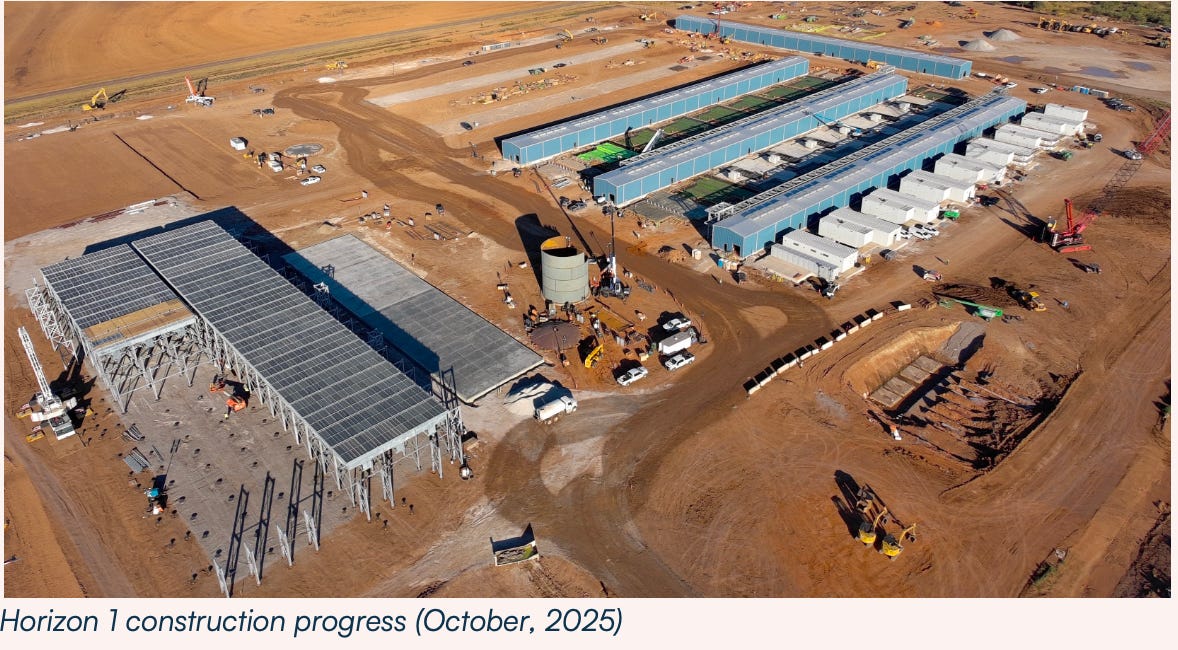
The power generation side faces similar constraints. According to the International Energy Agency, most new US datacenter demand will be met by natural gas over the next decade. This makes sense given the immediate power needs and grid constraints, but it creates another bottleneck. Since 2023 delivery times for large gas turbines have more than doubled to approximately four and a half years. Building new gas capacity now costs about $2,400 per kilowatt-hour, up seventy-one percent in just four years according to energy research group Wood Mackenzie.
These aren’t problems that can be solved by throwing more money at them—they’re industrial production and supply chain realities that create time-based moats. A company that secured transformer capacity and turbine orders in 2023 has infrastructure coming online in 2025-2026. A competitor starting that process today won’t see those assets operational until 2028-2029, by which point the early mover has established customer relationships, refined operations, and potentially locked in the most attractive hyperscale contracts.
This dynamic explains why institutional investors are willing to provide capital at favorable rates to companies demonstrating execution capability. It’s not just about financing GPUs—it’s about financing access to infrastructure bottlenecks that take years to resolve. The companies that navigate these constraints successfully over the next 24-36 months will have structural advantages that persist for years afterward.
Institutional Capital Arrives in Force
BlackRock’s Ben Powell, the firm’s CIO, recently made comments that should be carefully considered by anyone evaluating the AI infrastructure space. Speaking about the AI capital expenditure cycle, Powell noted that the current investment deluge is “far from peaking” and that hyperscalers are behaving “like it’s winner-takes-all.” More significantly, he observed that these tech giants have “barely tapped capital markets” for AI expansion, suggesting we’re in the early innings of a credit-fueled infrastructure boom.
Powell’s remarks aren’t idle speculation—BlackRock demonstrated conviction by participating in the consortium that acquired Aligned Data Centers for forty billion dollars, one of the largest datacenter transactions ever completed. When Powell says that being “recipients of that cash flow is a pretty good place to be,” he’s speaking from the perspective of an organization that just made one of the sector’s largest bets. His commentary about “positive surprises driving stocks in the year ahead” for picks and shovels infrastructure—”whether you’re making chips, energy, all the way down to copper wiring”—reflects an institutional view that the AI infrastructure build-out has years to run.
The implications extend beyond BlackRock’s specific investment. When the world’s largest asset manager explicitly endorses the infrastructure layer over application companies, allocates tens of billions to the space, and publicly states that demand could double by 2030, it validates the investment thesis for the entire sector. Grid operators from the US to the Middle East are scrambling to meet datacenter power demands that the International Energy Agency projects could double this decade. This isn’t speculative technology risk—it’s infrastructure financing supported by contracted revenue from creditworthy counterparties.
The IREN and CoreWeave convertible offerings benefit from this institutional appetite. Convertible arbitrage funds, credit investors, and infrastructure-focused allocators are all seeking exposure to AI infrastructure cash flows. The favorable terms achieved—IREN’s 0.625% and CoreWeave’s reported 1.5-2% range—reflect genuine demand from sophisticated capital, not promotional financing. These rates would have been unthinkable for growth-stage infrastructure companies just a few years ago.
Why the Next 2-3 Years Define Market Structure
The central question for investors isn’t which company will win—it’s whether the companies executing now will establish positions that become very difficult for later entrants to challenge. The infrastructure economics suggest they will.
Power capacity takes several years to secure, assuming you can even get in the queue with utility providers who are overwhelmed with datacenter requests. Transformer lead times of three to four years mean decisions made today determine what’s possible in 2028. Datacenter construction requires twelve to twenty-four months even with expedited timelines, and that assumes you’ve already solved the power and equipment procurement challenges. GPU supply chains favor companies with established relationships and forward purchasing commitments. Once this infrastructure is built, it provides cost advantages that last decades—you’re amortizing construction costs over ten to twenty year asset lives while competitors are still trying to get their projects permitted.
Scale economics compound these advantages. Larger deployments reduce per-megawatt construction costs through bulk purchasing and standardized designs. Companies placing multi-billion dollar GPU orders receive better pricing than those buying in smaller increments. Operating leverage improves dramatically as revenue scales faster than overhead costs. Perhaps most importantly, credit quality improves with execution, creating a self-reinforcing cycle where successful infrastructure deployment leads to better financing terms, enabling faster growth, which further improves creditworthiness.
Customer relationships layer additional stickiness onto these structural advantages. Hyperscalers generally prefer working with fewer, larger infrastructure providers rather than managing dozens of relationships. Once AI workloads are deployed and running, migration costs become prohibitive—you’re not easily moving training runs consuming thousands of GPUs to a different provider. Companies that establish track records with major customers like Microsoft, OpenAI, or Meta can leverage those relationships to win expanded deployments and additional business.
This explains why investors remain attracted to companies across the sector despite varying debt loads and business models. CoreWeave’s substantial existing debt hasn’t deterred capital providers because the company has demonstrated operational capability at scale and maintains contracted revenue from major customers. The OpenAI partnership provides visibility into near-term demand even as the company builds capacity for broader customer diversification. The colocation model enables faster deployment compared to vertically integrated competitors, though at the cost of less control over infrastructure economics.
IREN’s approach differs fundamentally—vertical integration from land and power through datacenter ownership and GPU deployment—but serves the same strategic purpose of establishing early-mover infrastructure advantages. The Microsoft contract validates their execution capability while the prepayment structure de-risks a portion of capital deployment. Nebius, Cipher Mining, and TeraWulf are each pursuing their own variations on the same basic strategy: secure critical infrastructure now, build efficiently, operate reliably, and establish customer relationships that compound over time.
The market’s bet isn’t that one company wins and others lose. It’s that companies deploying capital most effectively over the next few years will have such significant structural advantages that later entrants will struggle to compete except in specific niches or geographies. The infrastructure bottlenecks, customer relationship stickiness, and scale economics all point toward market consolidation around a handful of major providers.
The Build-Out Phase Has Begun
The recent convertible offerings from IREN and CoreWeave, coming within days of each other and both achieving strong institutional demand, mark a clear transition point for AI infrastructure investing. The phase where capacity announcements and partnership speculation drove valuations has ended. The phase where companies must actually build infrastructure efficiently, operate it reliably, and demonstrate paths to profitability has begun.
This transition will be uncomfortable for investors accustomed to steady quarterly progression. Infrastructure buildouts are inherently lumpy—spending precedes revenue by quarters or years, operating leverage takes time to materialize, and external factors from transformer lead times to customer demand shifts create volatility that pure software businesses don’t experience. The Oracle precedent is instructive: even mature, profitable companies with decades of operating history face significant stock pressure during datacenter transformation initiatives. Oracle’s co-CEOs have noted that regardless of how specific deals like their OpenAI partnership evolve, the infrastructure they’re building will be utilized across multiple customers and use cases over its asset life.
But the fundamental thesis remains compelling for those with appropriate time horizons. AI compute demand appears durable at scale, supported by continued investment from hyperscalers behaving, as BlackRock’s Ben Powell noted, “like it’s winner-takes-all.” The infrastructure bottlenecks in transformers, gas turbines, power procurement, and grid connections create natural moats for companies that secured capacity early. Institutional capital is flowing into the sector with conviction, evidenced both by direct infrastructure investments like the forty billion dollar Aligned acquisition and by the favorable terms achieved in recent debt offerings.
The companies that navigate this build-out phase most effectively—deploying capital efficiently, operating reliably, and maintaining strong customer relationships—should emerge with structural advantages that persist for years. Whether those companies end up being the current leaders or some combination of established players and new entrants remains to be determined by execution over the next few years.
For investors, the key is maintaining appropriate perspective. This is year one or two of a multi-year infrastructure build-out cycle. Judging success or failure based on near-term operating metrics misses the point—the relevant question is whether these companies are building assets that will generate attractive returns once deployed. The market is making a substantial bet that they are, and recent financing activity suggests that bet is being placed with conviction by sophisticated capital.
The romance phase, where capacity announcements alone drove valuations, is over. The build-out phase, where execution separates winners from followers, has begun. That’s a more challenging environment for investors to navigate, but ultimately a healthier one for the sector’s long-term development.
This publication is for educational and informational purposes only and does not constitute financial, investment, or trading advice. Readers are solely responsible for their own investment decisions. The author may hold positions in the securities mentioned.
I'm still so amazed by how much CoreWeave keeps stacking up it's debt. The debt mountain just keeps increasing, crazy.