
Credo is a company most people in the market have never heard of, yet it sits inside one of the most critical bottlenecks of modern AI infrastructure: moving data reliably between chips, servers, and optical links at increasingly higher speeds.
They don’t build GPUs, they don’t operate data centers, and they don’t sell cloud services. Their role is less visible but essential: Credo designs the physical-layer components that allow large-scale systems to function without connection failures.
On the surface, it looks like a cable-and-optics business.
In reality, Credo participates in a market that expands alongside hyperscaler AI cluster growth.
What the Company Actually Does
Credo develops hardware solutions that sit between compute elements in data centers:
Active Electrical Cables (AEC)
Optical DSPs used inside transceivers
Retimers, gearboxes, SerDes IP
Telemetry and signal-integrity software (PILOT)
Next-generation interconnect formats still in early stages
Across all these categories, the purpose is the same:
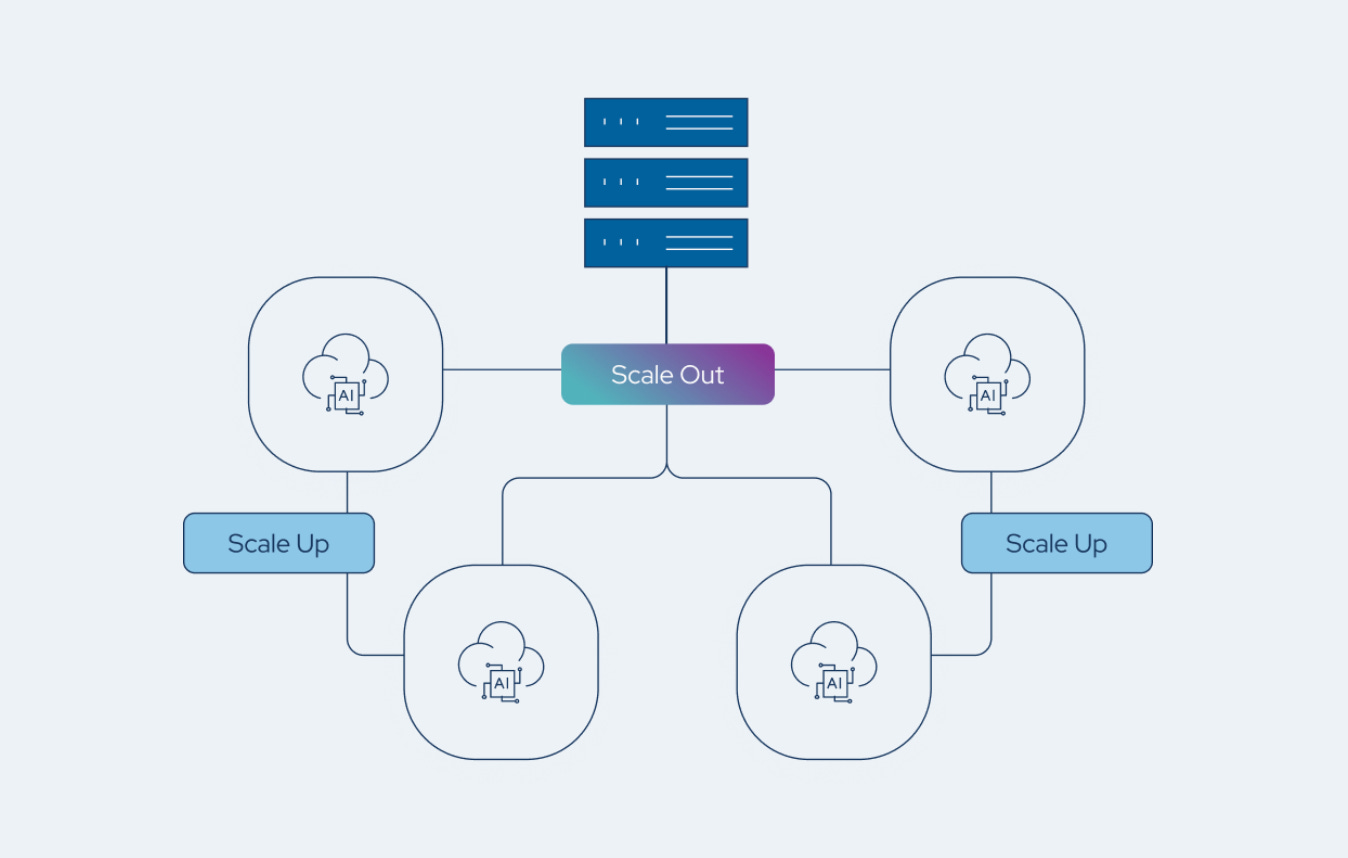
reduce signal errors, improve bandwidth, and stabilize links across large AI clusters.
Why the Company Became Relevant Only Recently
AI clusters have changed the architecture of data centers:
more GPUs
denser racks
higher throughput
much stricter reliability requirements
As systems scale, even small link errors become extremely costly during AI training.
Legacy solutions (DAC, older AOCs, classic optics) start breaking down under these conditions.
That shift created demand for the type of products Credo builds. In other words, the market found Credo
How to View Credo Within the Competitive Landscape
Credo operates in the interconnect layer of AI infrastructure, the portion of the stack responsible for high-speed electrical and optical links between compute nodes.
The relevant peer group includes:
Marvell
Broadcom
Coherent
Lumentum
legacy DAC and optical module suppliers
Within this landscape, Credo is best described as a challenger gaining share in areas where older architectures face limits around reach, power efficiency, or link stability.
At the same time, the company is still materially smaller than the incumbents, which makes its revenue and margins more sensitive to timing of customer programs and hyperscaler capex decisions.
What Matters for Investors
Exposure to hyperscaler AI capex:
A large portion of Credo’s growth depends on investment cycles at a small number of very large customers. These cycles can be strong, but they are not linear.Scale and design-win trajectory:
The company remains early in its scale curve. Individual design wins can move the financials more than they would for larger competitors.Product maturity:
Some initiatives such as ALC or next-generation interconnect concepts are long-dated. They may expand the addressable market, but they should not be treated as near-term revenue drivers.Execution risk:
Credo’s differentiation depends on its ability to deliver new architectures reliably and on schedule. Larger players have the resources to respond if Credo stumbles.Evolving market structure:
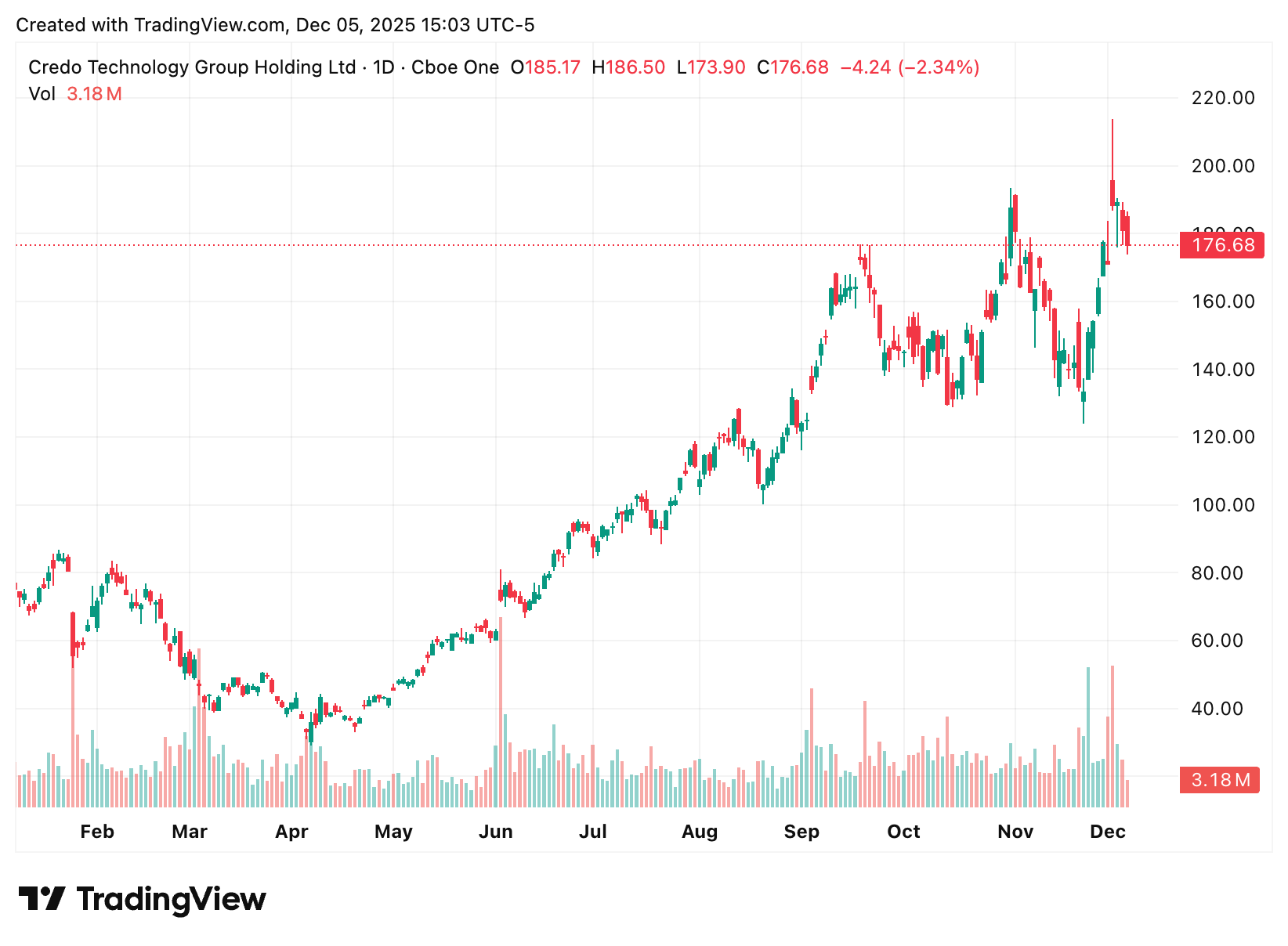
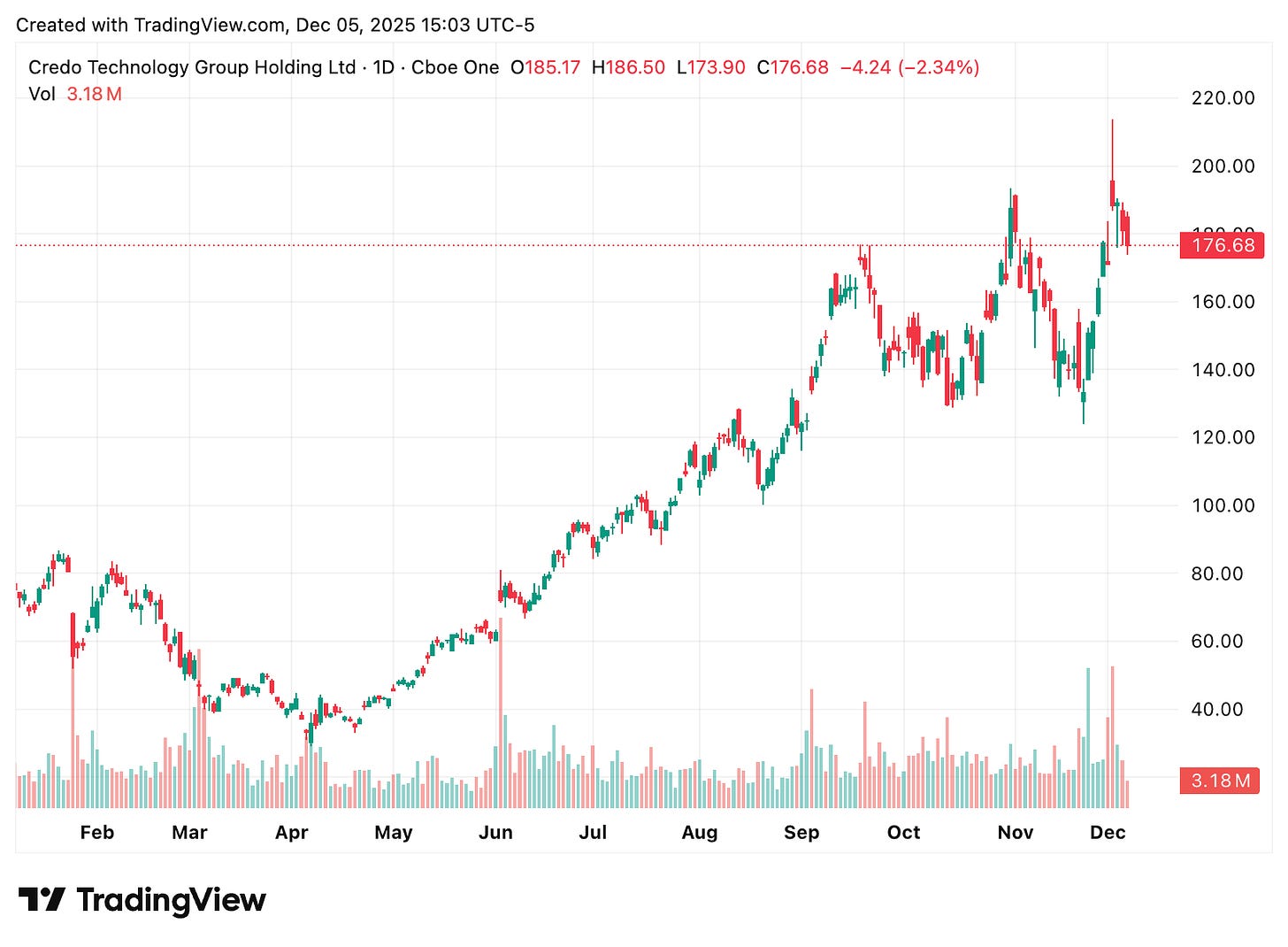
The interconnect layer is becoming strategically important as AI clusters scale, but the competitive equilibrium is not settled yet.Credo has become a favored name among investors, with the stock more than doubling over the past year as interest in the AI interconnect segment increased.
Created with TradingView