
Key Points:
Tesla’s valuation still depends on imaginary robotaxis and political lobbying, not real performance.
Real autonomous driving leaders like Waymo are struggling to make money even with operational fleets.
Political favoritism is now Tesla’s critical lifeline — not technology, not sales.
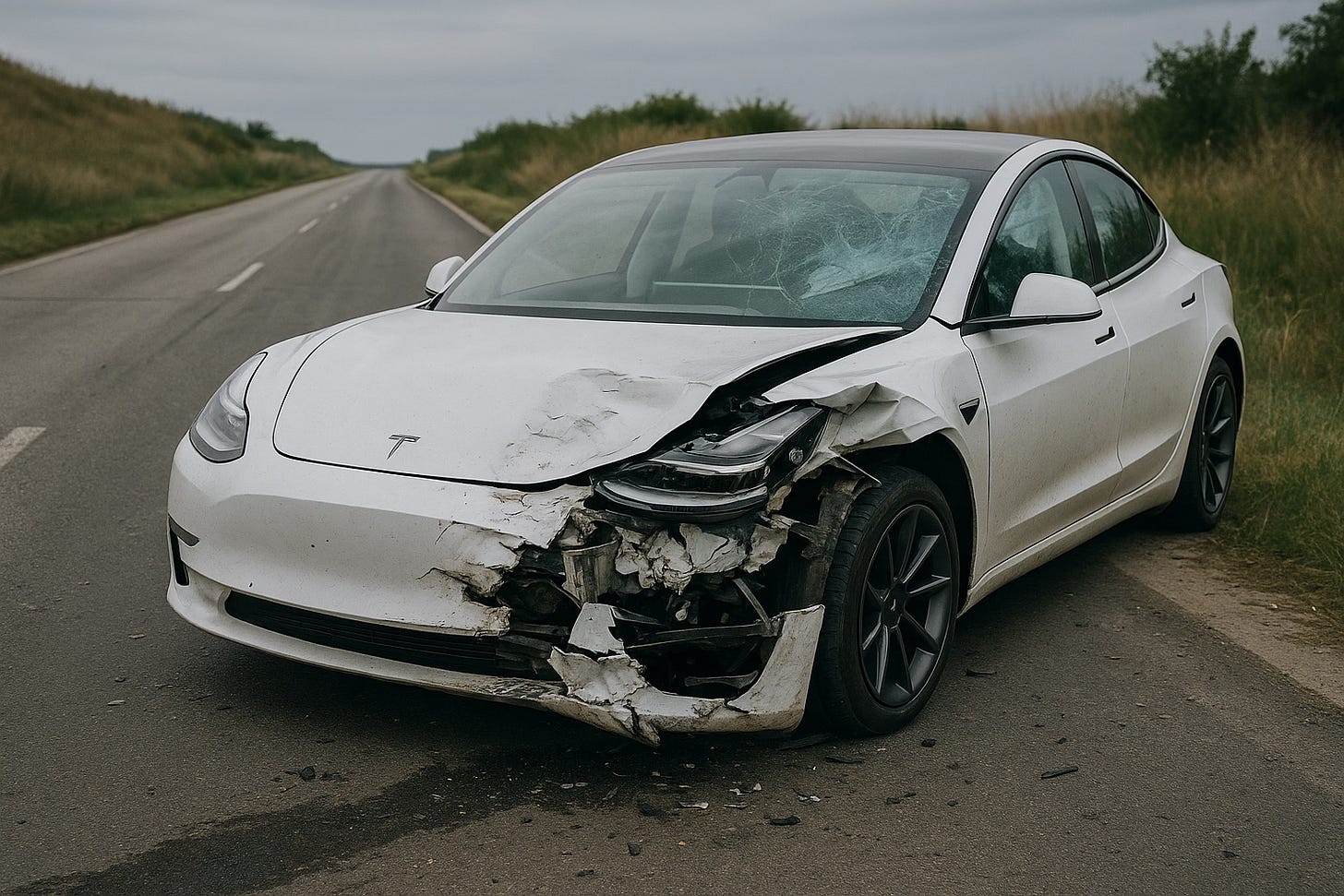
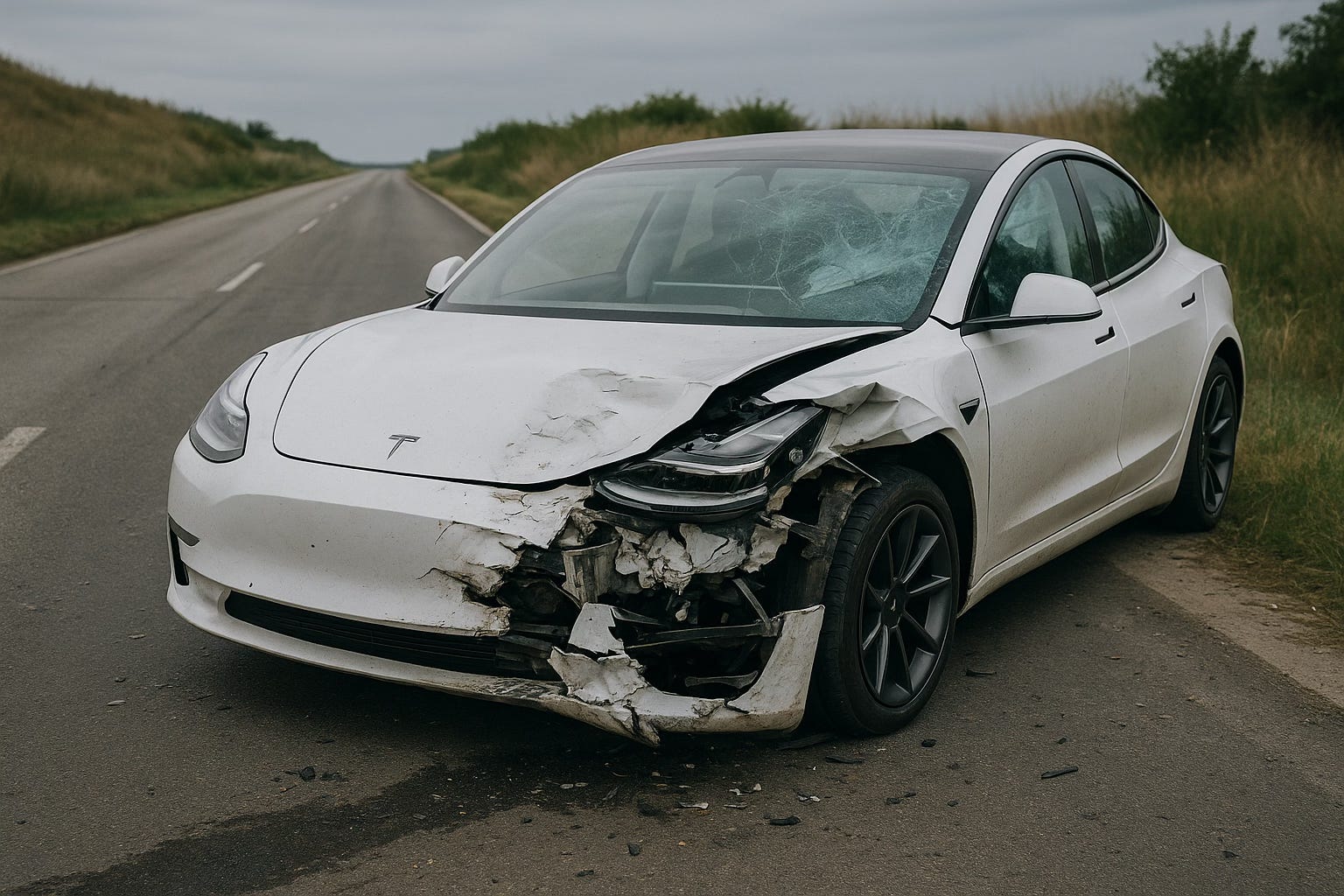
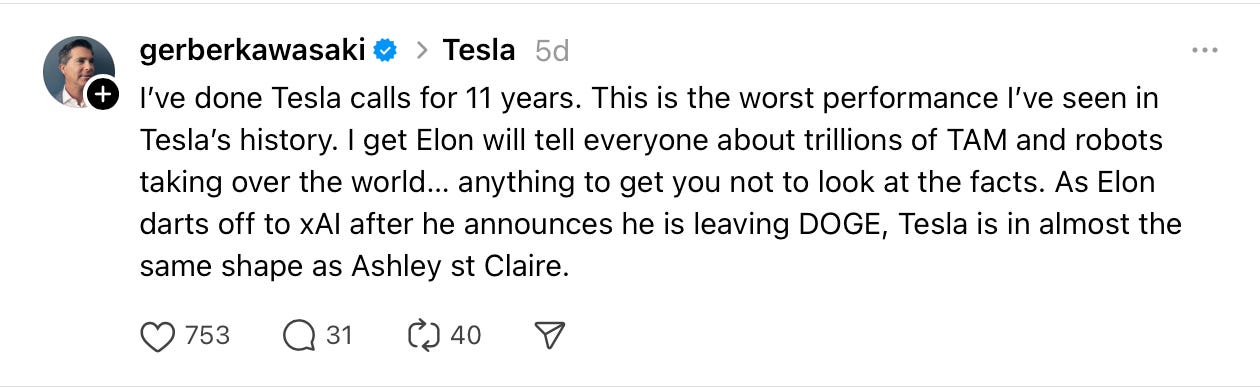
On April 22, Tesla — Musk’s primary cash cow — posted disastrous Q1 results. Revenue from car sales collapsed by 20% year-over-year, the worst decline in the company's history. Profit plunged by 70%, falling to $400 million. If not for $595 million in environmental regulatory credits (ironically created by the Democrats Musk claims to despise), Tesla would have reported a loss. These credits still deliver up to $2 billion in annual revenue. Ross Gerber invested in Tesla for many years and turned bearish
At the same time, Musk has fully repositioned himself as a warrior against liberals — and Republicans have rewarded him. The $250 million he funneled into Trump’s election campaign is already paying dividends, as Tesla’s fundamentals deteriorate.
Politics now props up the valuation
On April 25, Tesla’s stock jumped 10% after the National Highway Traffic Safety Administration (NHTSA) — long targeted by Musk — quietly dismantled key autonomous vehicle reporting rules. From now on, companies must report serious incidents only monthly — not every time something happens.
Why does this matter? Because Tesla’s autopilot system is fundamentally unsafe. Without human intervention, it consistently underperforms. Musk refuses to equip Teslas with critical safety hardware like LiDAR, purely to keep production costs low.
Meanwhile, the numbers don’t lie: According to LendingTree, Tesla drivers are involved in more accidents than drivers of any other brand — 26.67 accidents per 1,000 drivers, up from 23.54 last year. The study included 30 brands and was published just two months ago.
However, the Republican administration doesn't seem to care, because Tesla needs to be saved after its poor financial performance. Tesla remains one of the few companies where the stock price for the last 10 years has been inflated by imaginary revenues from non-existent robotaxis and humanoid robots Musk keeps promising.
The next milestone: launching a fleet of robotaxis in Republican-dominated Texas this June. Investors are promised they will finally see real robotaxi revenue by the end of the year.
Six years ago, Musk made a similar promise in 2019, confidently claiming that next year Tesla would have over one million robotaxis on the road.
Meanwhile, analysts continue to justify Tesla’s outrageous valuation — fueled by Morgan Stanley, Wedbush, and Cathie Wood — despite all these broken promises. If Tesla were valued purely as a traditional automaker — without the fantasies of robotaxis and humanoid robots — its stock price would struggle to stay above $100