

Tesla: Why Musk’s Empire Still Stands Despite the Protests
Tesla has become a symbol of resistance—not just to Elon Musk, but to the broader political shift in America.

With Democrats wiped out after the election, many see boycotting Tesla as their last real form of protest. The stock is down nearly 50% from its peak, cars are being vandalized, and even Trump appeared at a Tesla showroom in what many saw as an attempt to appease Musk in a bizarre White House showroom stunt.
But despite the backlash, Tesla's stock refuses to collapse.
Wall Street's Shock: Tesla Should Be Crumbling—But It’s Not
Even JPMorgan, one of the biggest banks in the world, is baffled.
"We struggle to think of anything analogous," they admitted after slashing their price target to $120 per share.
Yet, despite the protests, bad press, and declining sales, Tesla surged 4% in the last trading session, reclaiming the critical $250 level.
What’s going on? Why does Tesla seem invincible?
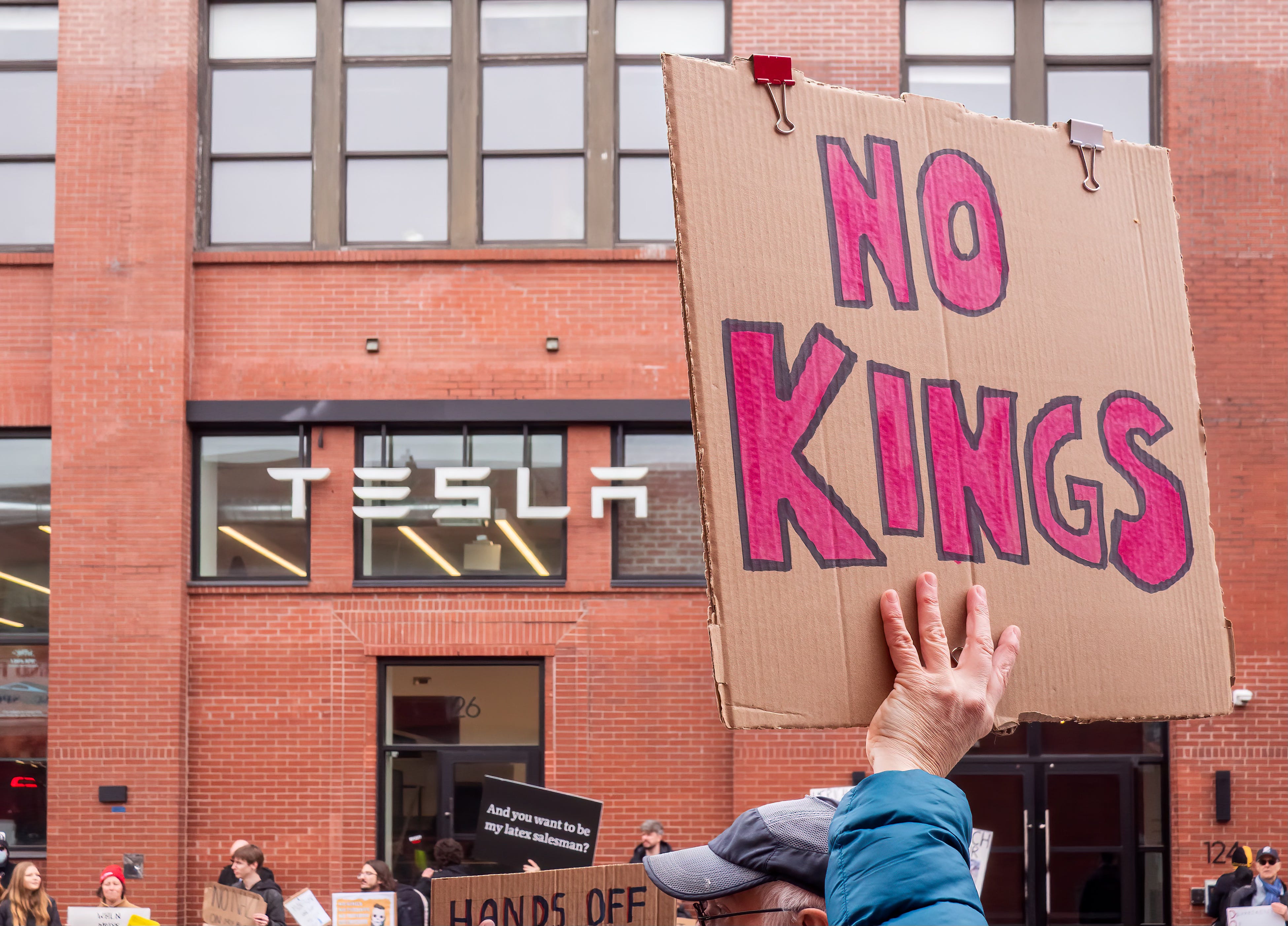
Protesters outside a Tesla dealership. (Photo by Rhododendrites via Wikimedia Commons, CC BY-SA 4.0)

1. Institutions Are Silent—And That’s the Problem
💰 42% of Tesla is institutionally owned.
🔇 Zero major fund managers have openly criticized Musk’s gesture, widely compared to a Nazi salute, or his controversial tweet referencing Hitler and mass killings.
😶 Even Bill Ackman, who crushed university presidents over antisemitism, has stayed quiet.
Why? Fear.
💀 Musk’s fan army can destroy reputations overnight.
🐋 His financial empire spans Tesla, SpaceX ($350B valuation), xAI, and X ($44B valuation).
📉 No hedge fund wants to risk getting blacklisted from Tesla bonds, IPOs, or credit deals.
Banks, CEOs, and hedge funds are playing the same game: "Hear no evil, see no evil."
2. The Only Fund Brave Enough to Dump Tesla? Denmark.
The only institution that took a stand was Denmark’s $21B AkademikerPension fund, which sold off its entire Tesla stake.
Their statement was brutal:
"Elon Musk is destroying Tesla’s brand and value. He supports controversial political figures, spreads misinformation, and criticizes governments."
But in the U.S.? Silence. The message from Wall Street is clear:
"Wall Street’s silence suggests that, for now, Musk’s controversies take a backseat to profits."
3. Tesla’s Stock Price Is Built on Fantasies, Not Fundamentals
Tesla isn’t just a car company.
It’s a religion.
📈 Tesla grew 8X during the pandemic—not because of car sales, but because analysts started pricing in future dreams:
🚗 Full Self-Driving (FSD) – Not fully ready, but priced in.
🤖 Tesla Robots – Still a concept, but priced in.
🚕 Robotaxis – No timeline, but priced in.
🦄 Pure Musk hype – Always priced in.
No other stock in history gets priced on things that haven’t happened yet.
A Tesla investor summed it up best:
"I hate the car, but the stock is too cheap to pass up."
The Verdict: Musk’s Shield Won’t Hold Forever
📉 Protests won’t kill Tesla overnight, but the cracks are forming.
📉 JPMorgan slashing its price target to $120 is a warning shot.
📉 Wall Street is still pretending Tesla is invincible—but for how long?
Musk can defy gravity, but market forces always win in the end.
But What If He Wins?
What if Musk weathers this storm? What if Tesla holds the $250 level, regains momentum, and climbs back to all-time highs? What if this is just another bump on the road to Musk controlling more than just the EV market?
Because if Wall Street’s silence holds, if funds continue to bow to Musk's power, then we have to ask:
If institutions keep bowing to Musk, how much influence will he ultimately hold?
Maybe the real danger isn’t Tesla’s stock price crashing.
Maybe the real danger is what happens if it never does.
This publication is for educational and informational purposes only and does not constitute financial, investment, or trading advice. Readers are solely responsible for their own investment decisions. The author may hold positions in the securities mentioned.