


Warren Buffett: The Therapist of Wall Street
Why does everyone keep quoting Warren Buffett, now that he’s finally passing the torch at Berkshire? Because he became a kind of therapist for retail investors. His core message is simple: buy quality stocks and hold them as long as you can breathe.
But here's what’s left out: Buffett doesn't hold everything forever. His latest trick? Quietly offloading a massive stake in Apple right before the Q1 market selloff. The stock that was fighting to stay above $260 is now struggling to hold $200. Once again, Buffett played the game better than everyone else — either to give his successor a clean slate and a mountain of cash, or because he didn’t trust what was coming politically. Either way, it’s a lesson that made me rethink my own portfolio strategy.
Let’s talk about when to sell, because if you're serious about investing, the sell button should be as sacred as the buy.
The Timing Trap
The biggest problem for most investors isn’t buying the wrong stock — it’s holding the right one for too long.
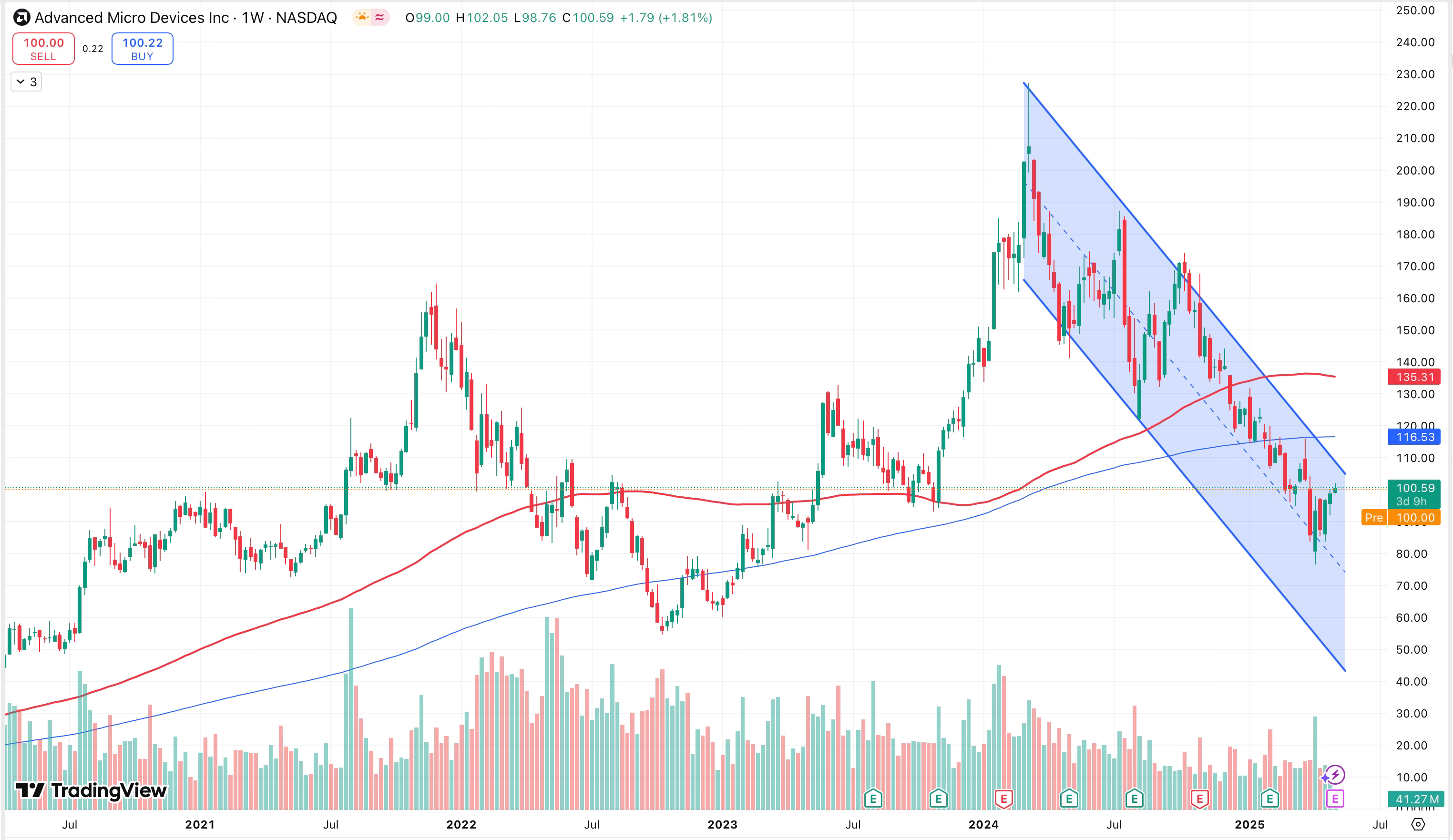
You catch the trend. You make money. Then you freeze. You wait for more. And the market, as always, humbles you. Look at AMD — once hyped as “the next Nvidia.” It exploded from $170 to $227, then crashed to $95. Why? Because AI wasn’t selling like it used to, and analysts who hyped it up disappeared just as fast.
That’s exactly what happened to me with AMD. At first, the stock dipped just a few percent — I told myself it was just normal profit-taking. Then it slipped a bit more, and I thought, “It’s too late to sell now.” Eventually, the gain turned into a portfolio drag. What was once a smart bet became emotional baggage.
I sold my entire position in Palantir at $121 the moment I saw the stock stalling. With a trailing PE of 650, this company needs to deliver miracles every quarter — anything less and it’ll implode. It’s a retail cult stock, and plenty of people will keep hoping. But I made my 25% gain at peak euphoria.
And it wasn’t my first rodeo. I once sold it at $80 — only to watch it surge another 20% after earnings. How? Why? It already had sky-high multiples. I re-entered above $100 and averaged down during a tariff-driven dip. This time, after exiting, I felt no regret. Realized gains beat portfolio stress any day.
Every stock price carries non-market baggage: hype, emotion, narrative. You’re not just fighting the market — you’re fighting the little voice that whispers, “What if it goes higher?”
But that voice never pays your bills. Realized profits do.
When Hype Inflates, Reality Corrects
We live in the age of story stocks. Everyone chased AI. Marvell hit $130. ARM touched $190. SMCI surged 6x — while still just selling commodity servers to Nvidia. Analysts raised price targets just to catch the train. Then SMCI cratered after accounting drama.
This isn’t new. Hype adds 30–50% to a stock’s price. Sometimes more. No one admits it — especially not the funds holding the bag — but you see it in every chart.
What kills the rally? Not valuation. Attention span. When the crowd moves on, your “future of AI” becomes “cyclical semiconductor supplier.” Suddenly that $200 target looks like fantasy.
If a stock runs +40% in two weeks, ask: do I believe in the company — or the crowd?
The Euphoria Exit Rule
Here’s a rule that rarely fails: if you're asking yourself, “Am I missing out if I sell?” — the answer is no. You're late already.
Applovin went from nowhere to almost entering the S&P 500. Then dropped 15% in a single day. That’s not a bug, it’s the entire feature of momentum. These stocks can be re-entered. You’re not getting married. You're collecting checks.
You will never regret taking profit into strength. But you’ll always remember ignoring the signal.
5. Why Selling Hurts (And Why You Still Must Do It)
Selling feels wrong because it creates a break: you were right, you made money — but now you have to say goodbye. You feel like you’re quitting too early. Like you're giving up on something bigger.
But here's the truth: nothing goes up forever.
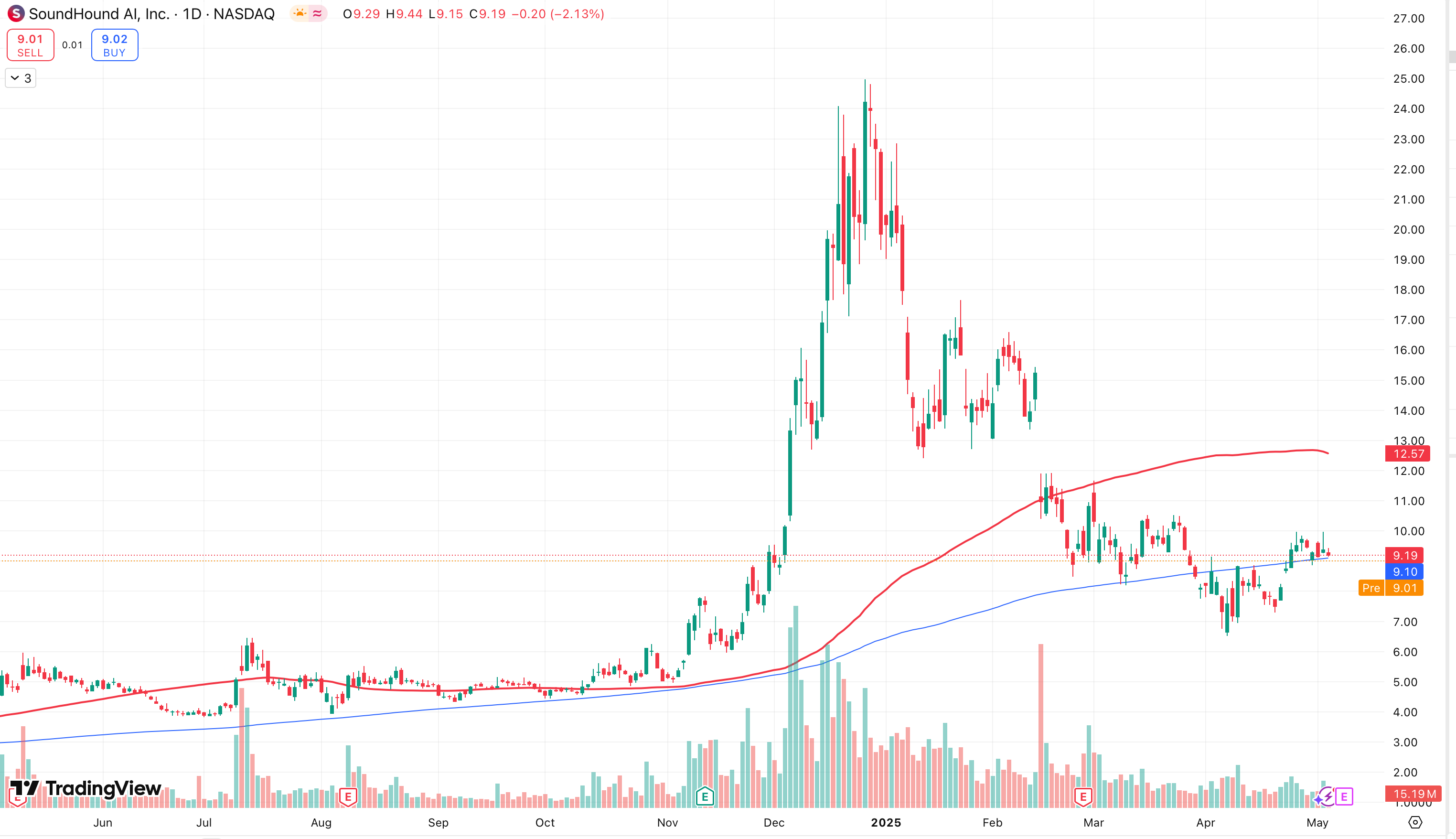
Tesla was $475. It got halved. Qualcomm hit $220. Macy’s was $60. Soundhound popped to $22 — it’s at $9 now. WRD was $40 on Nvidia hype. Today? $7.
This isn’t personal. This is gravity.
Every winning stock becomes an old headline. And if you didn’t lock in profit, all you’ve got left is regret.
Know What Kills a Rally
Strong stocks don’t fall because of valuation. They fall because the macro shifts. Because portfolio managers rebalance. Because money moves.
Here’s what ends bull runs:
ETF rebalancing: They dump the biggest winners. Nvidia, Supermicro — clipped to reallocate into laggards.
Rate hikes: Suddenly, no one wants high beta. They want dividends and safety.
Regulation and trade wars: One political speech, one tariff headline, and your darling becomes a liability.
You need to understand the environment you're trading in. Bull runs live and die on liquidity, sector rotation, and political chaos. Learn to spot it — or get out before it hits.
Make a Plan. Stick to It.
Every position should start with a plan. What’s the upside? What’s the downside? Where do you exit? Why?
Write it down. Tape it to your desk. And stick to it.
Because your P&L is your business. Not Reddit’s. Not Twitter’s. Not Buffett’s. Yours.
If something rallies 40%, and you didn’t sell — that’s not conviction. That’s inertia. Don’t confuse the two.
You Don't Need to Sell the Top — You Just Need to Get Paid
Trying to sell at the exact top is a fantasy. Real traders don’t think like that. You’re not here to win trophies — you’re here to win money.
Look at Vistra: it hits highs, then corrects. Then bounces. If you’re chasing it at the top, you’ll always be behind. But if you took profit and waited — you had cash when it mattered.
Every good trade is two parts: entry and exit. Most people only obsess about the first.
Final Word
There’s no shame in taking profit.
You’re not trying to be right. You’re trying to get paid. And sometimes, the smartest money move is walking away while the music is still playing.
Because FOMO fades. Hype fades. Stories fade.
Cash doesn’t.
This publication is for educational and informational purposes only and does not constitute financial, investment, or trading advice. Readers are solely responsible for their own investment decisions. The author may hold positions in the securities mentioned.