


How do you avoid ending up a total bagholder when you’re buying high-beta stocks? Everyone knows the feeling, including me. A little-known company starts ripping higher, hyping up some brand-new tech the market’s never seen, and a fresh trend kicks off. You load the boat, and then, right after an earnings report or some random catalyst, the stock gets cut in half.
Look, I’ve definitely been through this myself, and this piece is built entirely on personal scar tissue. You honestly can’t write stuff like this unless you’re actually in the trenches trading.
So, what are the actual red flags to watch out for so you don’t get completely burned? Some things are obvious, like cash burn or whether they’re actually making money, but there are subtler warning signs. The kind of things management accidentally slips on earnings calls or gets buried in the filings - the exact signals that tell you to dump the stock or stay the hell away in the first place.

1. Lies
Zinc battery maker EOSE 0.00%↑ was a retail darling a year ago, pulling in just $15M in revenue for 2024. During the first half of 2025, they brought in $25M, yet stuck stubbornly to their full-year guidance of $150M. They ended up hitting $144M. But alongside that came the brutal reality check: accumulated losses hit $980M, and factory line downtime sat at 30%. The stock cratered 39% in a single session and is still trading way below its highs.
The drop wouldn’t have been nearly as catastrophic if management had just been straight about their production bottlenecks and operational delays. At the end of the day, it always comes down to trust. Micro-caps trying to scale bleeding-edge tech are inherently risky. Sure, the company grew revenue tenfold year-over-year, but their overhyped promises turned a record-breaking top line into a total disaster.
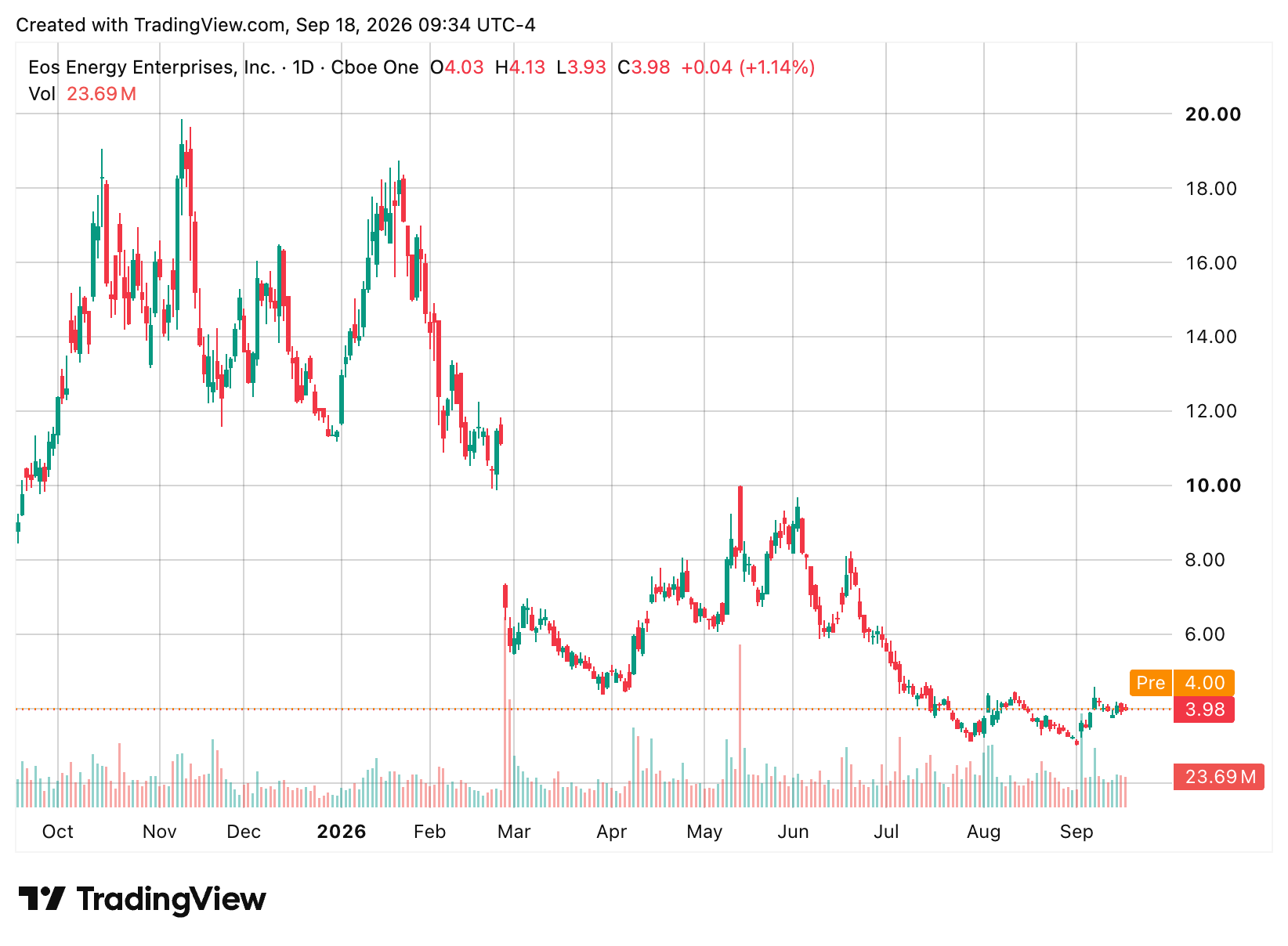
So, how do you handle a situation like this and keep from getting crushed? If you spot a massive disconnect between real manufacturing execution and management’s fairy tales, don’t wait around, trim the position or dump it entirely so you can actually sleep at night. Setting stop-losses on speculative names is completely useless when a gap-down opens the stock in half. And stop listening to social media cheerleaders pumping bags; trust the SEC filings and the earnings calls instead. The second management starts deflecting direct questions with corporate bullshit, run.
2. Dilution
When a company with a minimal cash cushion dives into a capital-intensive sector, whether it’s building data centers, biotech R&D, hardware manufacturing, or aggressive M&A (shoutout to ONDS 0.00%↑) - harsh math takes over. If you’ve only got a few dozen or even a couple of hundred million dollars in the bank, no major bank is going to hand you a clean loan.
That’s when vulture financing steps in (think EOSE style): private equity funds stepping up with capital at 15–20% interest rates packed with asset pledges and warrants, or an endless loop of share dilution that methodically destroys shareholder value.
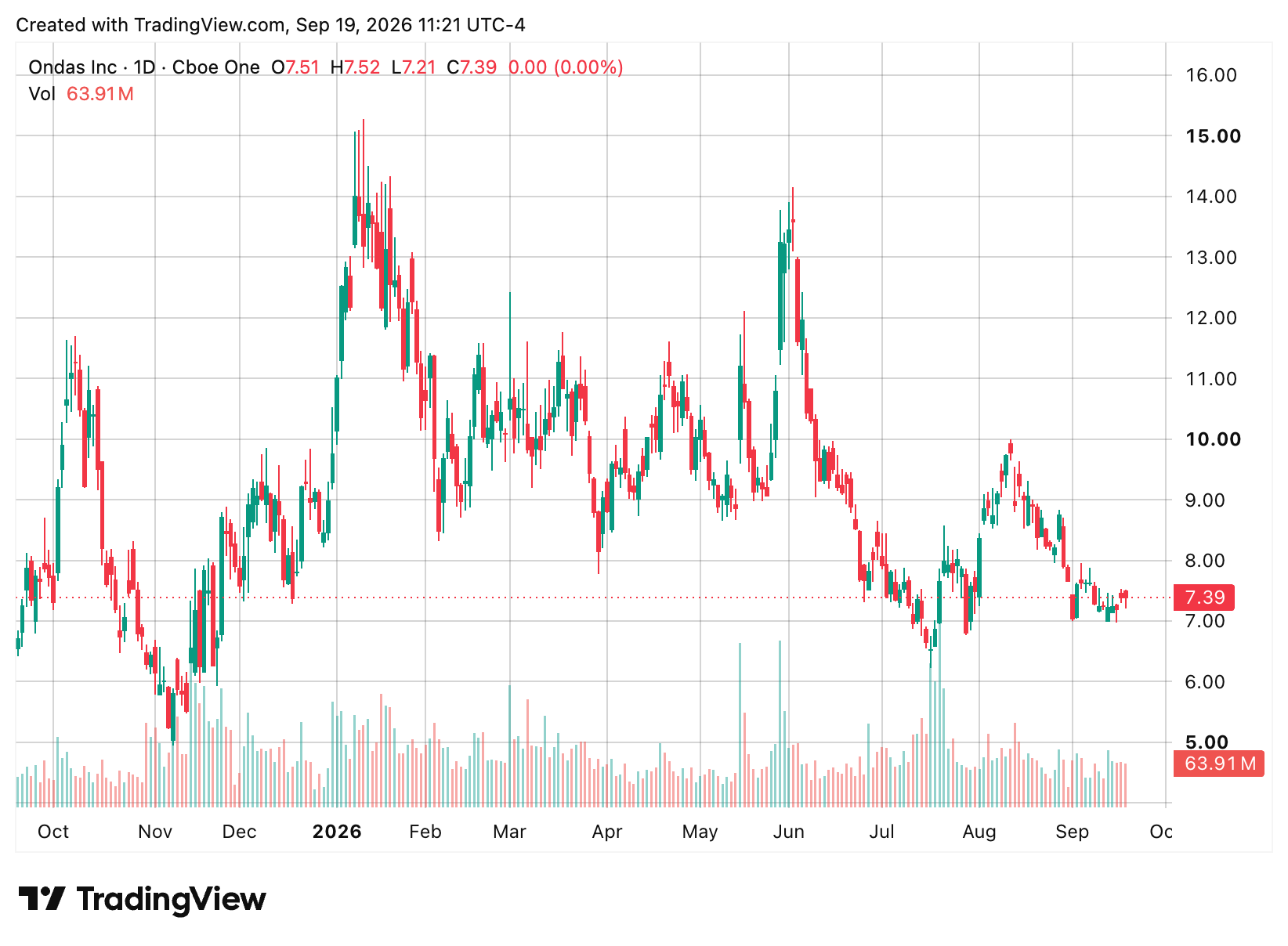
It’s one thing if the business is ripping, revenue is doubling every quarter, and the company easily outpaces the dilution with raw growth. It’s a completely different story when management misses deadlines, plans go sideways, and the entire corporate performance turns into one non-stop dilution cycle.
If a micro-cap with $50M on its balance sheet announces it’s about to build a $2B factory or cure cancer, ask yourself one simple question: who is actually paying for this? If JP Morgan or a banking syndicate is backing it with cheap debt, fine. But if this whole banquet is being funded by you buying 500 shares hoping to catch a multi-bagger on a retail pump, the answer is obvious. You’re the one footing the bill through continuous dilution.
Take a look at the chart for Ondas. At first glance, the business appears to be experiencing rapid growth, with quarterly revenue (represented by the orange bars) increasing from $4.2 million in March 2025 to $83.8 million by mid-2026.
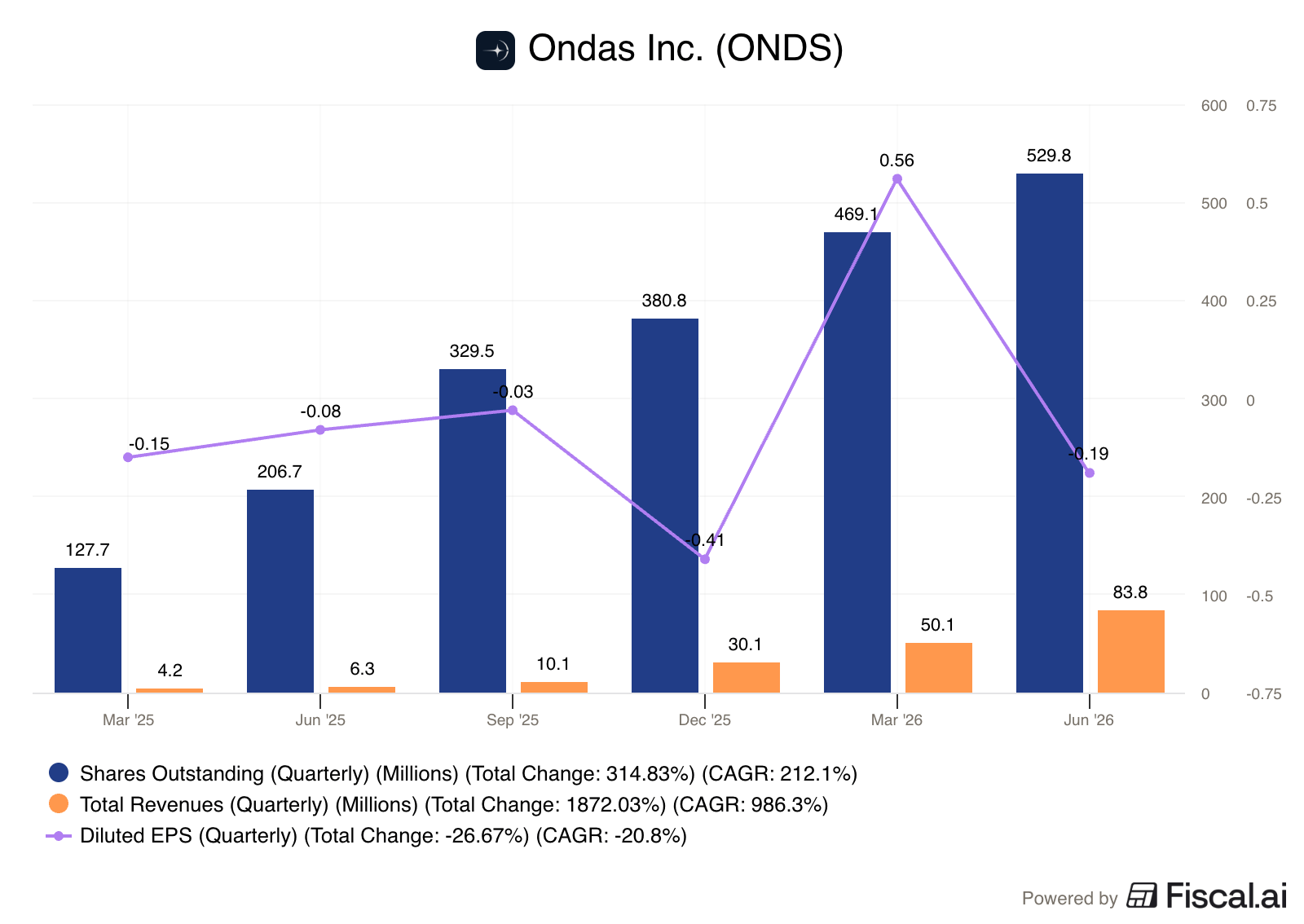
However, the underlying reality is reflected in the blue bars, which show the total number of shares outstanding. Over the same period, equity issuance expanded by 314.83%, rising from 127.7 million to 529.8 million shares. Management chose the path of least resistance to fund ongoing operations and M&A transactions through continuous additional share issuance. As a result, the stake of every minority shareholder undergoes substantial dilution, while the diluted earnings per share (Diluted EPS) remains in negative territory. Formal business growth is thus accompanied by the systematic destruction of shareholder value.
3. Pump
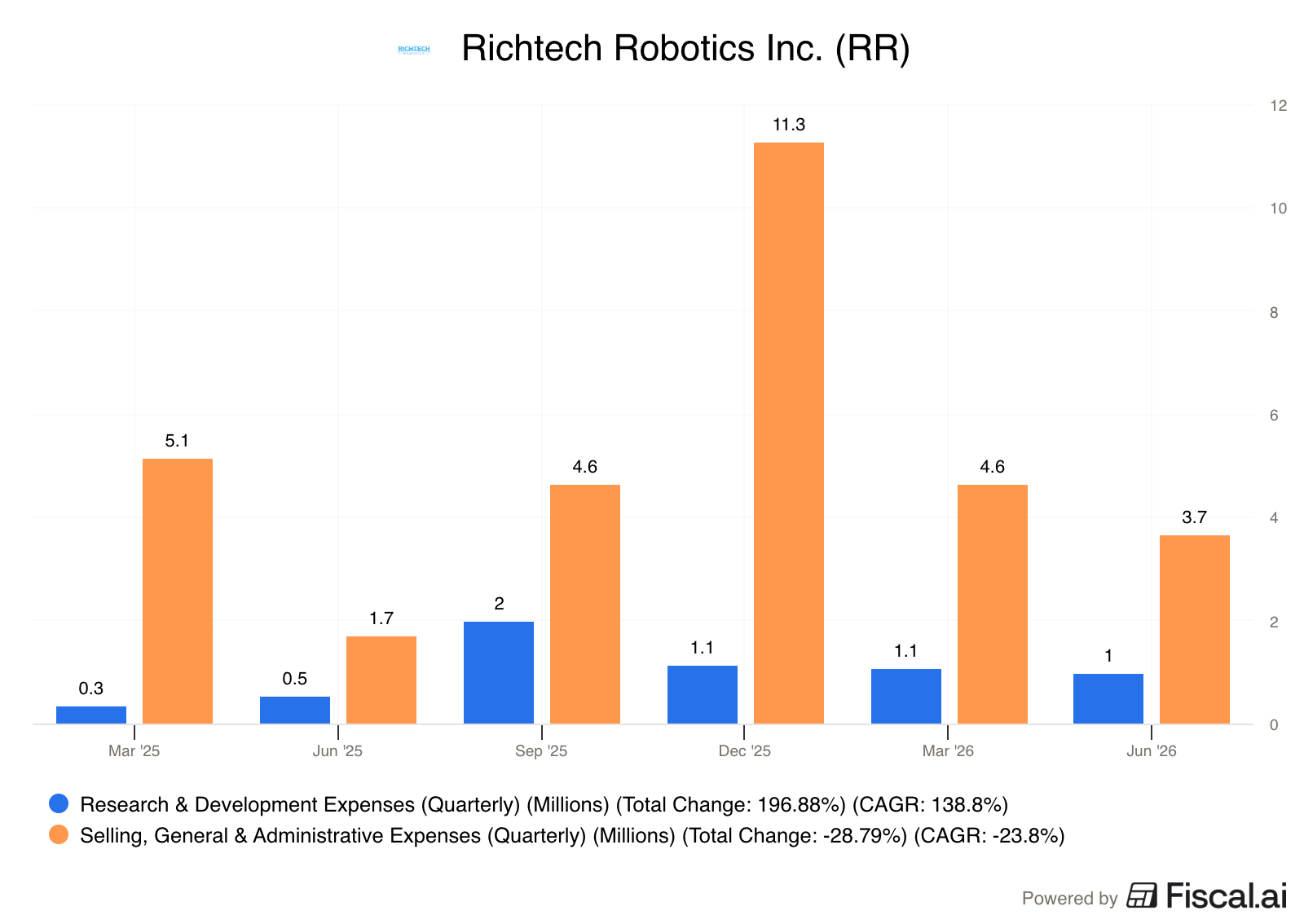
A year ago, in October, I pointed out that a company positioning itself as a robotics player cannot afford to spend this little on R&D (when the stock was trading around $6). Just look at how much real startups like 1X or Agility pour into development. Yet I vividly remember when large accounts on X were actively pumping this name.

My advice is simple: do not fall for slick marketing and the word Robotics in a ticker name. Many use these buzzwords precisely to hook retail investors. But you only need to glance at the financial statements to spot the trap, when a company spends vastly more on administrative expenses than on actual research and development, it is a glaring red flag.
These were just three red flags that retail investors need to watch out for, because you and I manage our own money, while hedge funds manage other people's. There is a very simple rule to follow when buying high-beta stocks: do not believe what is written on social media; read the financial statements and ask yourself questions guided by common sense. If a company claims to be in the robotics business, why isn't it pouring tens of millions of dollars into it? And can another company realistically fulfill a whole year's plan in a single quarter? These are simple questions whose answers help preserve your capital. Most importantly - ask these questions in silence.
This publication is for educational and informational purposes only and does not constitute financial, investment, or trading advice. Readers are solely responsible for their own investment decisions. The author may hold positions in the securities mentioned.