

Lessons from the crash — long calls protect your money
The biggest winner isn’t just your portfolio — it’s your clarity

First of all, it’s worth noting how well the recent paid post performed — the one where I broke down the leading players in critical minerals and the early-stage startups that could explode as U.S.–China tensions escalate. That tension isn’t going anywhere. It’s baked into the next decade.

But today I want to focus not on the stocks themselves, but on the lessons from Friday’s selloff — because that’s what really determines who survives and who profits in this market.

A sharp drop always triggers fear, especially when you see double-digit losses in a single day. It hits hardest in names that split opinion — the so-called hot shots that are still pre-revenue and may stay that way for a few more quarters.
Meanwhile, mainstream analysts keep pretending that nothing exists outside MAGS, UNH, NIKE, and CAT. I stopped watching CNBC the day I realized they debate three times a week whether it’s better to buy NIKE or DISNEY. When you invest in something like ARBE or AMPX, you’re basically alone with your doubts.

There are no reliable analysts covering these names — either you do the research yourself (and who has time for that?) or you rely on community sentiment. That’s exactly what happened with IREN when the retail community pushed back against JP Morgan’s $24 target. The stock dropped from $50 to $40 in just two days. That was a moment of truth — it took real conviction to stay in and not panic.
To survive moments like that, you need a plan.
Option strategy: the longer, the better
Take long-dated options — ideally LEAPs, or at least six months out — to protect yourself from volatility and earnings shocks. I used to play with weeklies, and that’s the worst thing you can do. One headline and your trade is gone. It’s not a strategy; it’s a lottery.
I’ll give you a real example. I once bought a CRWV call two months before earnings, after the stock had already pulled back from its highs. When the company reported, the stock dropped from $144 to $90 in two weeks. My option went to zero. If I’d had another month or two, the story might’ve been completely different.
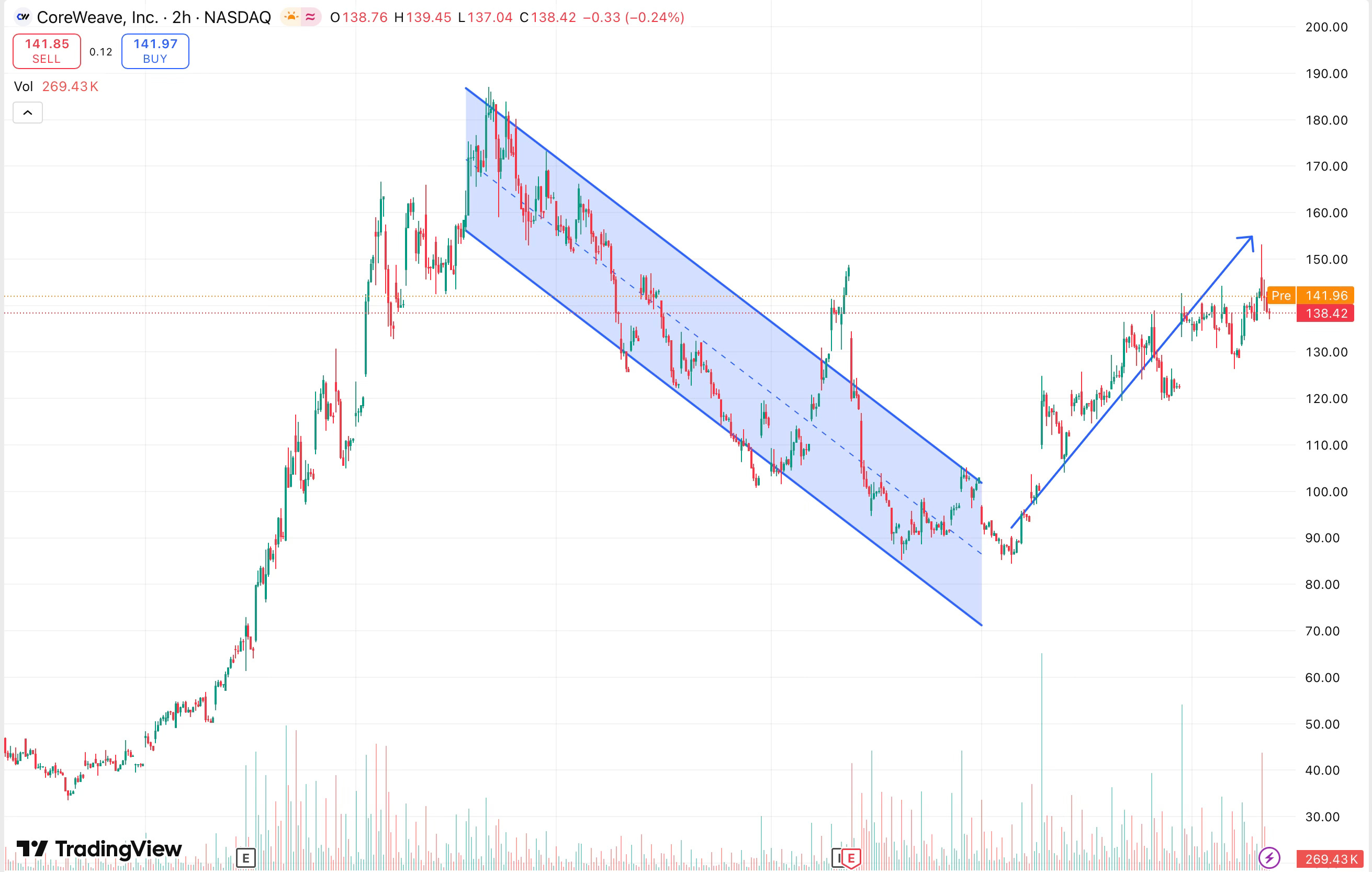
Options aren’t stocks. They move 30–50% a day, and the idea of “cutting losses” doesn’t really apply. The key variable is time. Longer-dated options give you breathing room to recover from short-term drawdowns and keep your sanity.
Yes, LEAPs cost more. But how do you price mental health? If you’re risking a large sum on short-term contracts, you’re signing up for sleepless nights. There’s no point in that kind of stress. Even many stockholders can’t sleep peacefully — imagine what short-dated option holders go through.
If you don’t have high conviction in a name, limit your exposure to 1–2% of your portfolio. That way, even a total loss won’t break you psychologically. You can always add later. Short-term options only make sense if there’s a strong catalyst — a major contract, a data imbalance, or a market mismatch. After the first CRWV earnings surge, for example, its peer NBIS traded under $40 for a while — it was obvious the market would soon rotate into similar plays.

The same pattern is happening now with all the critical mineral stocks being pumped. But none of that changes the fact that protecting your mental health is the real long game. Take more time, breathe easier, and stay longer in the market.
If you believe in a stock, you can buy a call around +20% from the current price. Even if it rallies to that level, you’ll have the flexibility to roll into a longer contract or rotate into a new name. The point is not to turn investing into a panic marathon.
Key takeaways:
– Take options with enough time. A week is a lottery, six months is a plan.
– Don’t chase other people’s triple-digit wins — everyone’s stress threshold is different.
– Stick with names you truly believe in; otherwise the market will break you.
– Protect your mental health — there’s no profit without discipline.
– The market doesn’t test what you know, it tests what you can endure.
This publication is for educational and informational purposes only and does not constitute financial, investment, or trading advice. Readers are solely responsible for their own investment decisions. The author may hold positions in the securities mentioned.
lol that screen 😂
There’s no profit worth the cost of peace. Mental clarity compounds longer than any trade ever will.