

Elon Musk’s recent tweet about “buying a sh*tload of GPUs” perfectly captures a seismic shift happening in the AI and data center world. Companies like IREN are not just buying GPUs—they’re building entire ecosystems around them. What started as massive Bitcoin mining operations has turned into a powerhouse model where cheap electricity fuels giant GPU datacenters. These facilities then rent out bare metal servers to AI labs and enterprises hungry for scalable, high-performance compute power.
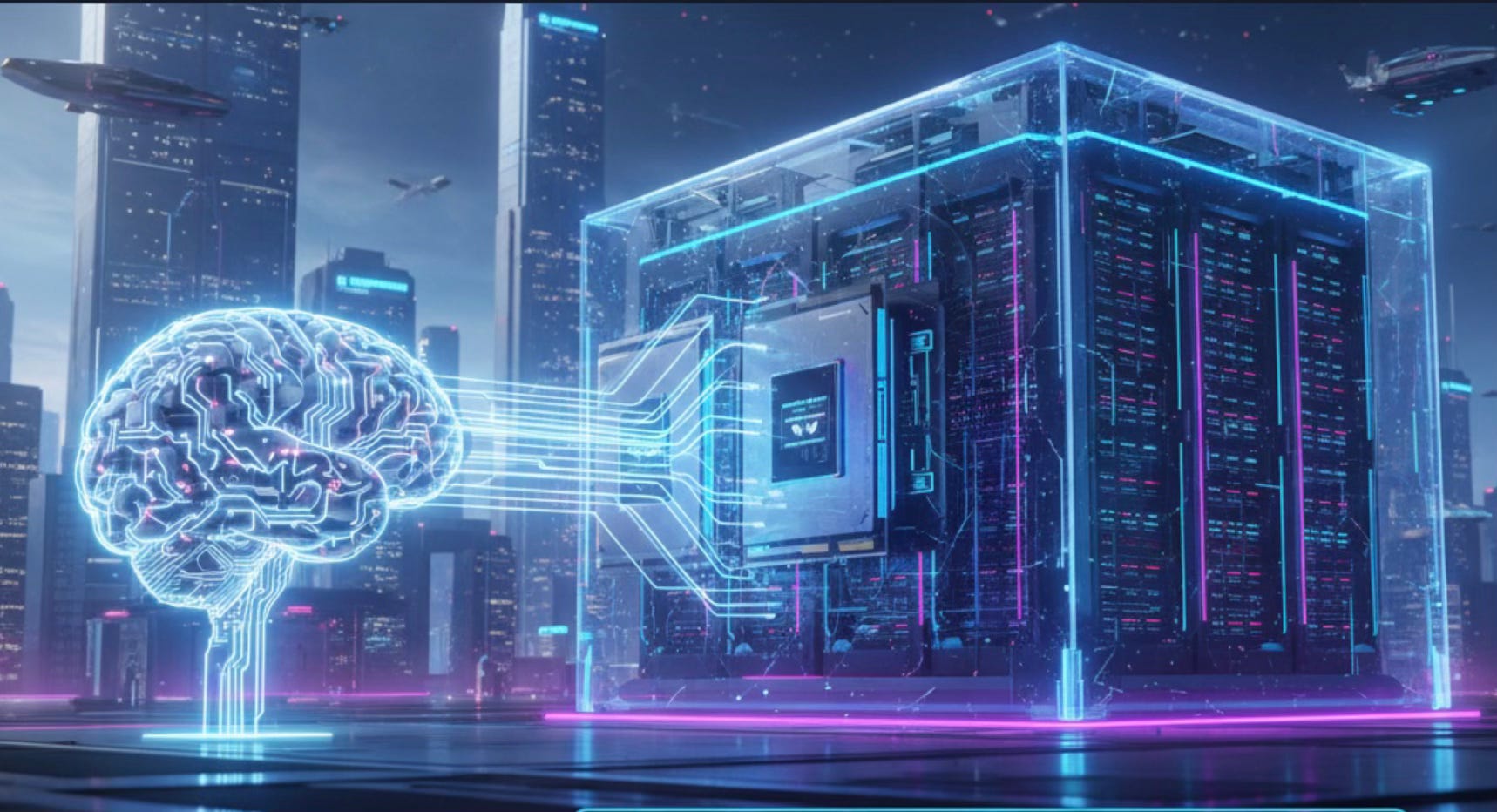
The beauty of IREN’s model is in its simplicity and scale. Cheap power is the lifeblood—converting electrical energy into racks of NVIDIA GPUs, situated in cold climates and optimized with cutting-edge liquid cooling technology.
Clients rent these bare metal servers, getting direct access to hardware without virtualization layers, so they can run their own software stacks and manage their AI workloads with total flexibility and control. It’s like leasing the foundation of a skyscraper—everything else, from offices to furniture, the client handles themselves.
This bare metal approach ensures maximum performance and efficiency for AI training, a critical advantage for labs that require top-tier computing without the overhead or latency of virtualized cloud environments.
It’s exactly why IREN is rapidly scaling from 1,900 GPUs to a projected 10,900 and beyond, targeting $200-250 million annualized revenue from AI cloud services alone.

IREN’s success signals a broader industry trend: GPU rental through bare metal datacenters is becoming the backbone infrastructure for the next wave of AI innovation. And with their rock-solid foothold in cheap power and scalable infrastructure, IREN’s 169% growth this year could be just the beginning of a much larger movement where raw computational power equals competitive advantage.
At the same time, it’s crucial to address the risks inherent in this business model.
🚨 The reliance on cheap and stable electricity prices means fluctuations in energy markets could impact profitability.
🚨Hardware supply chain constraints, rapid technological obsolescence, and market competition intensity also pose challenges.
🚨Furthermore, the model requires clients to possess significant AI expertise to fully leverage bare metal resources, which could limit the customer base.
👉🏻 We will delve deeper into these risks and how IREN manages them in the following sections.
Financial Performance: Strong Growth, But What Lies Beneath?
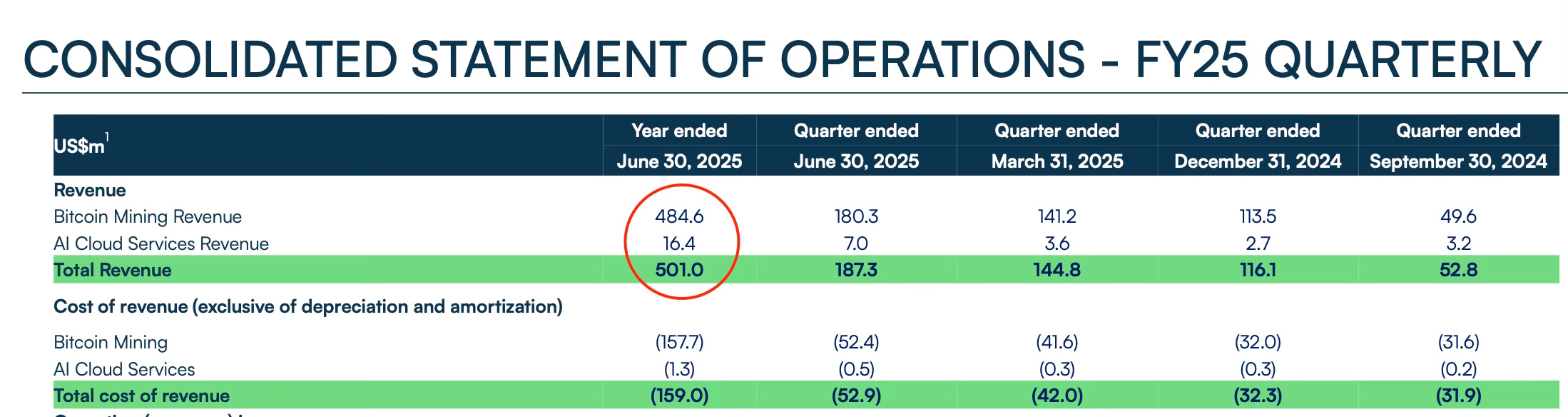
IREN’s FY25 financial results stun at first glance: revenue soaring to $501 million — nearly triple the previous year — and net income jumping to $87 million. The headline numbers scream success, driven primarily by an aggressive expansion in Bitcoin mining capacity and the fledgling but rapidly growing AI cloud segment.
While IREN’s total revenue in FY25 impressively reached $501 million, it’s important to note that the bulk of this income still comes from Bitcoin mining. The AI Cloud Services segment, despite its rapid growth and future potential, contributed just $16.4 million — a small fraction of the total revenue. This highlights that AI-related revenue is still in its infancy within IREN’s portfolio and carries uncertainty regarding how quickly and sustainably it can scale to become a major profit driver.
A closer look reveals some nuanced challenges. Massive capital expenditures have fueled this growth, pushing property, plant, and equipment from $441 million to almost $2 billion in a single year. Such explosive growth in fixed assets is typical for capital-intensive companies scaling infrastructure, particularly in emerging sectors like AI and crypto mining. However, these investments increase depreciation expenses, putting pressure on net income and cash flow.
