


🚨 Golden Dome: The $600B Space Shield — Who’s Getting Paid?
The U.S. is quietly building a new space-based missile defense shield, dubbed the Golden Dome. It’s designed to track and intercept hypersonic threats from space — and yes, it’s real. The first demonstration is already on the books for late 2028, just in time for the elections.
Think of it as CHIPS Act meets Star Wars defense — a multibillion-dollar push to create an American Iron Dome, but orbital.
If you're wondering where the next $600 billion in defense spending is going, this is it. And the contracts are starting to roll.
What exactly is the “Golden Dome”?
The Golden Dome is a proposed U.S.-based missile defense network modeled after Israel’s Iron Dome — but larger, faster, and more integrated with NATO and U.S. defense systems. While Iron Dome protects against short-range rockets and mortars, the Golden Dome would aim to intercept a broader range of threats, including ballistic missiles, hypersonics, and UAV swarms.
The plan is still in early legislative stages, but recent political momentum — including bipartisan support and explicit mentions in defense budget talks — suggests it could become a defining project of the 2030s.
What makes this project different:
Domestic production: U.S. contractors will likely take the lead, unlike Iron Dome, which was jointly developed with Israeli firms like Rafael.
Scalable deployment: The system could be installed not just on U.S. soil, but at military bases worldwide.
AI-driven targeting: Golden Dome is expected to rely on next-gen sensors and autonomous threat identification using AI.

A new phase for U.S. defense — and a new wave of winners
After months of political infighting over Pentagon spending caps, the U.S. defense budget is entering a radically new phase. Instead of slowing down, Washington is now preparing to rearm at scale — with ambitious initiatives like the Golden Dome at the center of it all.
This shift could redraw the map of military contractors in the next five years.
On one side, it creates space for new players: fast-moving defense tech firms that specialize in AI, edge computing, autonomous drones, and high-efficiency manufacturing. Companies like Redwire ($RDW), Zenatech, Rocket Lab ($RKLB) or AgEagle ($UAVS) are already maneuvering to gain relevance.
But this isn’t just a story about startups.
For legacy giants like Lockheed Martin (LMT) or RTX, building such cutting-edge capabilities in-house can be slow, expensive, and politically risky. In this environment, it’s often faster — and more strategic — to acquire specialized companies that already have the tech, the team, and the traction. That’s exactly why the next phase of defense expansion may bring a record-breaking wave of M&A across the sector.
If the Golden Dome is fully funded, we may see a flood of acquisitions as legacy primes scramble to stay ahead of the curve. Just like the telecom boom of the 2000s, the defense sector could be reshaped by who buys whom — and when.
This is a once-in-a-decade realignment. And the market hasn’t fully priced it in.
🔧 What the Golden Dome Needs — and Who Can Deliver
Counter-drone systems (CUAS)
Requirement:
Intercept hostile drones at short range, with mobile systems capable of both jamming and physical takedown. Think battlefield-tested solutions that can scale.
📌 Kratos Defense ($KTOS): One of the few with deployed CUAS and drone interceptors.
📌 Redwire ($RDW): Acquired Edge Autonomy, expanding into tactical CUAS.Redwire’s Drone Pivot: Why The Street Sees Room for Another Huge Run
·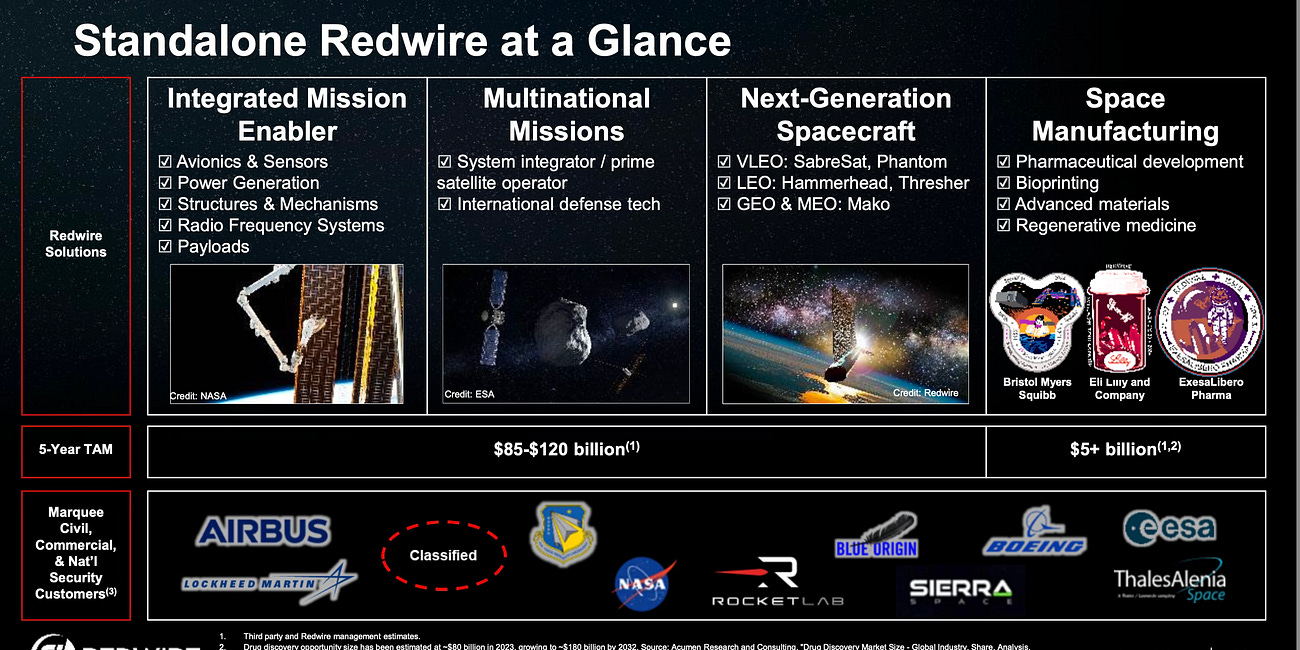
Redwire ($RDW): From Burn Rate to Pentagon’s Front Row
📌 Anduril (private): Backed by Founders Fund, already delivering CUAS platforms.
📌 Zenatech (private): Emerging integrator, fast-tracking modular soft-kill systems.Detection & early warning (Radar, LEO satellites)
Requirement:
Persistent tracking of drones, missiles, and stealth threats via radar and low-earth orbit satellites — with fast data relay.
📌 Raytheon ($RTX): Existing radar arrays, ties to NATO architecture.
📌 Rocket Lab ($RKLB): Deploying custom LEO satellites for defense.
📌 Redwire ($RDW): Owns in-orbit payload infrastructure and deployable sensors.
📌 Northrop Grumman ($NOC): Integrated sensor systems for missile tracking.AI & targeting coordination
Requirement:
Real-time decision-making software that can assign weapons to threats autonomously. Sensor fusion, pattern recognition, and threat prioritization are essential.
📌 Palantir ($PLTR): Already running battlefield-level sensor fusion for allies.
📌 Anduril: AI-first defense firm with full-stack targeting software.
📌 Kratos ($KTOS): Building autonomous swarming logic for aerial missions.Kratos: The Drone Stock That Doubled Without Delivering
·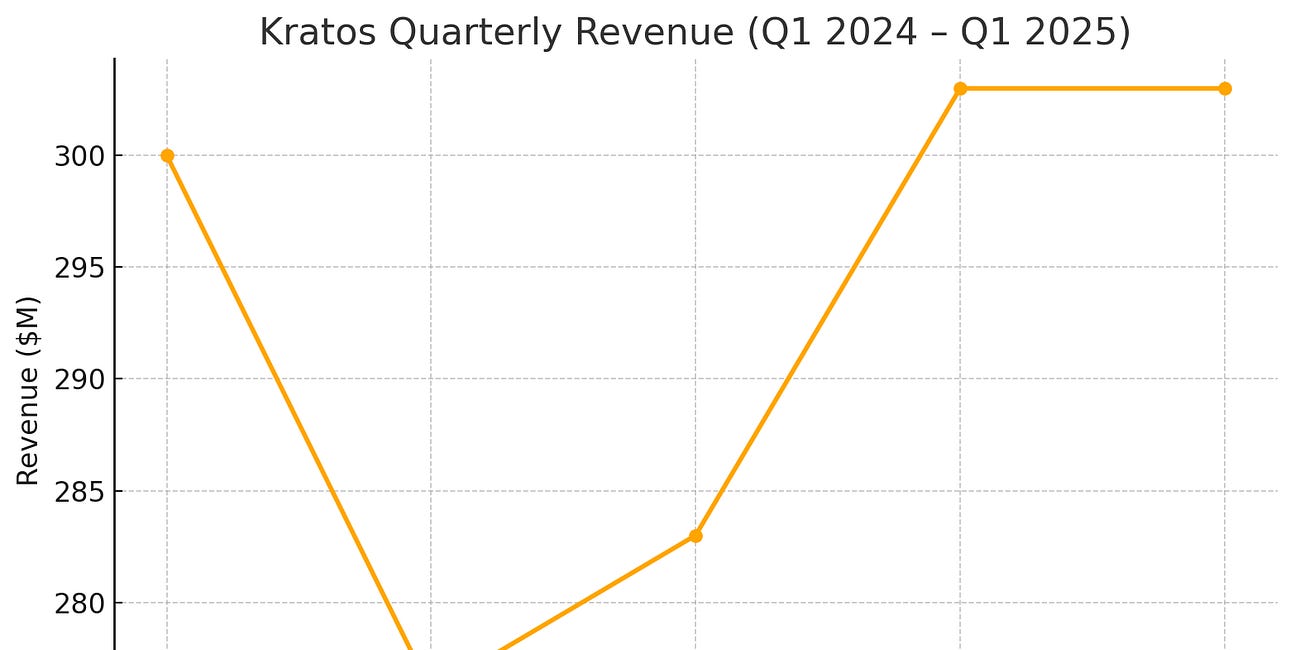
Kratos ($KTOS): +122% YoY — and nobody knows what it is
Interceptors (hard-kill & soft-kill)
Requirement:
Cheap, fast-response interceptors to neutralize threats — including lasers, missiles, and microwaves. Cost-efficiency is critical.
📌 Lockheed Martin ($LMT): Advanced interceptor systems, including THAAD.
📌 RTX: Directed-energy weapons and microwave systems.
📌 Kratos ($KTOS): Rapidly prototyping loitering munitions and low-cost interceptors.
📌 Epirus (private): Electromagnetic pulse systems for drone swarms.Drone manufacturing (ISR, decoys, strikers)
Requirement:
Build modular, software-defined drones in high volumes. Must comply with NDAA and support open-source integration.
📌 AgEagle ($UAVS): Blue UAS certified, expanding into military-grade production.
📌 Redwire / Edge Autonomy: Vertical integration of drone assembly & optics.
📌 Anduril: Building out U.S.-based drone factories with scalable production.
📌 Teledyne ($TDY): Legacy ISR platforms, now modularizing for tactical use.
📌 Zenatech: Supplying custom-built UAVs for NATO-aligned clients.🧠 Why Everyone’s Hiring Generals: Lobbying and the Rise of Tactical Startups
In the race to secure Pentagon funding, hardware alone isn’t enough. Startups entering the national security space have started playing by the big boys’ rules — and that means hiring former military brass, defense consultants, and full-time Washington lobbyists.
🔹 Zenatech, for example, recently inked a strategic partnership with Eagle Point Funding, a consultancy specializing in winning DoD and DHS contracts for emerging tech firms. The firm is run by former Israeli and U.S. military officers and has helped startups secure millions in non-dilutive defense grants.
🔹 The logic is simple: if your tech is solid, your next step isn’t fundraising — it’s embedding into the procurement pipeline. And that pipeline is built on relationships, not just product demos.
🔹 According to public filings, the number of defense-oriented startups engaging registered lobbyists has more than tripled since 2022, signaling a shift: small players want a piece of the trillion-dollar pie.
🔹 Many venture-backed defense startups now maintain formal advisory boards filled with former generals, DoD procurement officers, and NATO-affiliated consultants. Their job? Not building — winning.
In this new era, innovation is only half the game. The rest is access. And the companies playing both ends — like Zenatech — are positioning themselves not just as vendors, but as essential partners in America’s military-industrial reboot.
“Our collaboration with Eagle Point Funding will accelerate testing, pilot deployments, and enable long-term procurement discussions—helping ZenaDrone to advance as a key provider of American-made drone solutions,” said Shaun Passley, Ph.D., ZenaTech CEO. “Their expertise in navigating federal R&D funding programs such as SBIR and Department of Defense solicitations (DoD BAA), gives us a powerful advantage as we develop next-generation drone technologies aligned with US defense priorities. This partnership enhances our ability to accelerate product development, expand defense agency relationships, and unlock new growth without equity dilution.”
🧷 Notable Players in the Lobby Game
Eagle Point Funding – Strategic grant and contract advisors for emerging defense and dual-use tech firms.
American Defense International (ADI) – High-level lobbying shop working with both legacy and startup defense contractors.
Forbes Tate Partners – Increasingly active in representing drone and space companies in the House Armed Services Committee.
Palantir Technologies ($PLTR) – Palantir famously built its business on deep connections within the intelligence and defense communities.
Anduril – Private defense unicorn known for stacking its board with former generals and CIA officials — including multiple four-star officers.
Red Six Aerospace – A smaller player making noise by hiring ex-pilots and defense procurement experts to fast-track contracts.
These firms understand one thing: in defense, your product pitch starts at the Pentagon, not TechCrunch.
🧭 The Next Wave of Military-Industrial Realignment
The Golden Dome initiative is not just another procurement cycle — it signals a structural shift in how the U.S. defense establishment approaches layered security, asymmetric threats, and domestic innovation.
For investors, this means the emergence of new winners: not necessarily the traditional primes, but leaner, faster companies that have the tech, the regulatory clearance, and now — the political access.
Whether it’s Kratos prototyping low-cost interceptors, Rocket Lab building out LEO constellations, or Zenatech securing lobby-backed footholds, the pattern is clear: the battlefield is becoming more distributed — and so is the opportunity.
Expect more lobbying. More consolidation. And more deals that blur the line between Silicon Valley and Arlington.
For those paying attention, the reshaping of U.S. air defense isn't just a policy story — it's an investable one.

