

The main driver of last week’s market action was the new trade agreement between the U.K. and the U.S., which triggered a broad rally across asset classes. Trump also mentioned progress in negotiations with China, including a proposal to reduce tariffs to 80% of current levels. The market’s direction this week will likely depend on how those discussions evolve.
The U.K. deal offered some clarity: a 10% U.S. import tariff appears to be the new baseline, Boeing may receive additional orders, and the U.K. secured new export channels for steel. At the same time, non-tariff restrictions—particularly on U.S. agricultural goods—remained vague.
Overall, the takeaway is this: the White House is trying to unwind the trade trap it created without admitting it outright. The market seems to accept that a 10% baseline tariff is sustainable—and that’s a key shift in tone. Soon we’ll know the details about the potential China deal
"Substantial Progress" with China
There are several possible implications:
1. Commodities may rally. Any sign of easing tensions between the U.S. and China could lift commodity prices—especially oil and industrial metals—on hopes of improved trade flow and macro stabilization.
2. A chip deal might be forming. NVIDIA has been repeatedly modifying its H20 chips to comply with export rules. Now there’s a chance for a broader framework. Despite China’s efforts to shift to domestic alternatives, NVIDIA remains dominant in key segments. Meanwhile, state-owned SMIC—supplier to Huawei—fell 7% after a weak earnings report and gloomy guidance.
3. The NVIDIA ecosystem is still intact. Its supply chain—ranging from Micron and Dell to infrastructure vendors—is heavily tied to China access. The scale of lobbying behind keeping that flow open is hard to overstate.
4. U.S. retailers and importers benefit. Eased trade could support cheap Chinese imports and possibly resolve high-profile cases like TikTok, which remains stuck in legal and political limbo.
In short: the market is tired of headline-level trade war noise. A real, structured China deal—especially if it follows the UK deal’s playbook—could provide a much-needed sense of direction and relief.
Positioning in This Environment
Given this backdrop—one of cautious optimism driven by trade diplomacy—I took four new positions. Each reflects a separate hypothesis about where markets may be mispricing risk or underestimating future catalysts. The goal here is not to predict direction in broad indices, but to identify specific setups where sentiment and fundamentals have diverged.
XLE — A Tension Point Between China and OPEC
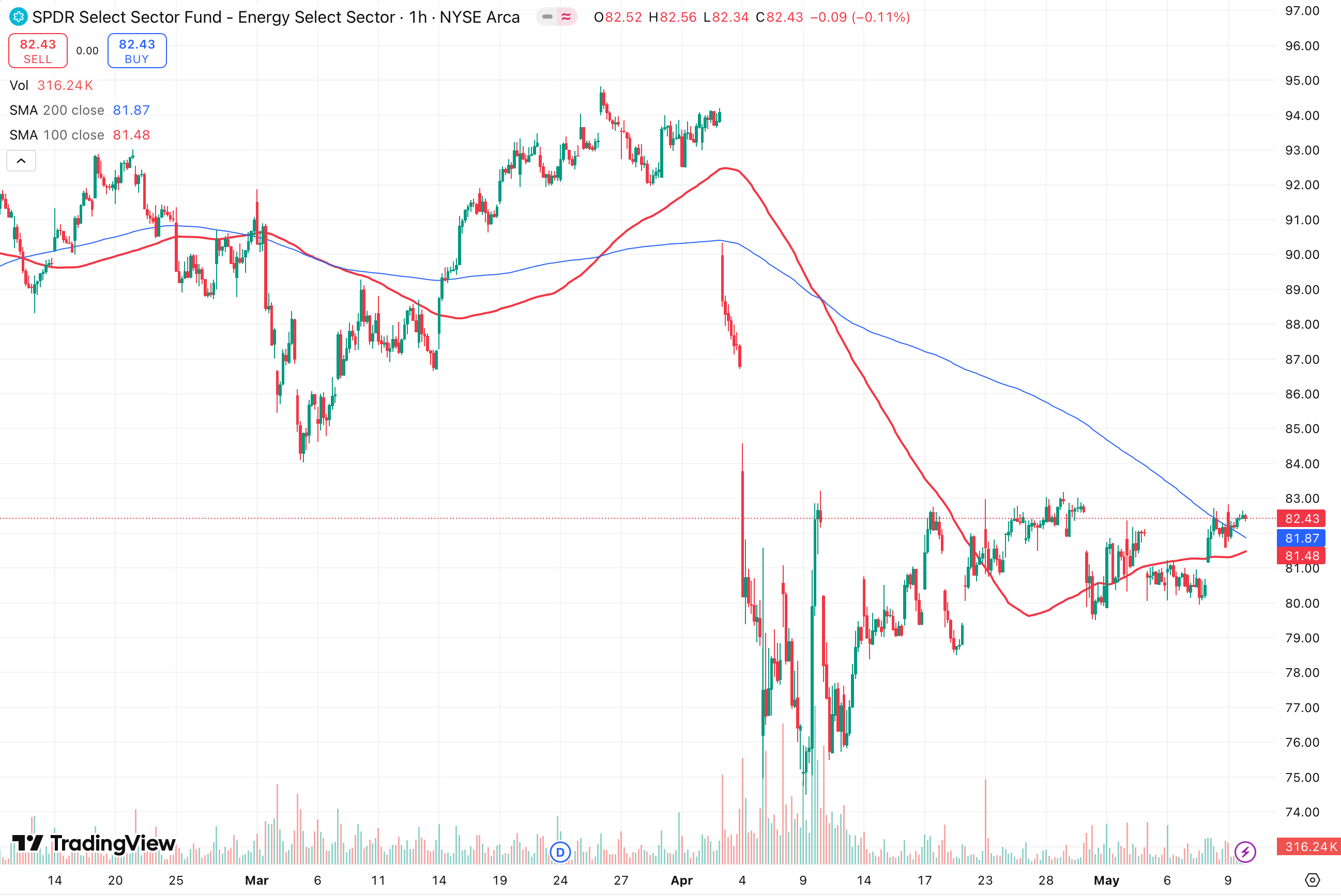
XLE collapsed in early April, breaking below all major moving averages. Now it’s attempting to reclaim the 200-day moving average — a technical shift that’s happening without clear fundamental confirmation yet.
Last week, the ETF moved sideways as the market digested reports of progress in U.S.–China trade talks, which could signal stronger global demand and support for oil prices. But that optimism is being countered by OPEC’s recent signals that supply increases may be on the table. For cartel members, cheap oil is a fiscal threat, and they’re unlikely to allow prices to drift too low without a response.
I entered at $81.38, not as a bottom-fishing move, but as a hypothesis: if XLE can hold above 81–83 this week, the market may begin repricing supply risks — especially if geopolitical stabilization continues.
This is not a call on energy sector recovery. It’s a targeted position on how the narrative around oil may flip, as technicals and macro dynamics converge.
Alcoa — Strong Fundamentals, Depressed Price
Alcoa delivered strong Q1 results:
- Revenue: $3.37B (+30% Y/Y)
- Operating income: $706M
- Net income: $548M
- EPS: $2.07
- Net margin: 16.27%
Despite this, the stock trades at a four-year low. The market is still pricing in weak global demand for aluminum and heightened tariff-related uncertainty—particularly after the U.S. reimposed tariffs on Canadian aluminum, which could cost Alcoa up to $90M annually.
This dissonance between financial performance and valuation reflects overreaction. The company is fundamentally healthy, but the narrative hasn’t caught up. The setup favors long positioning, especially if trade policy stabilizes or China demand surprises to the upside.
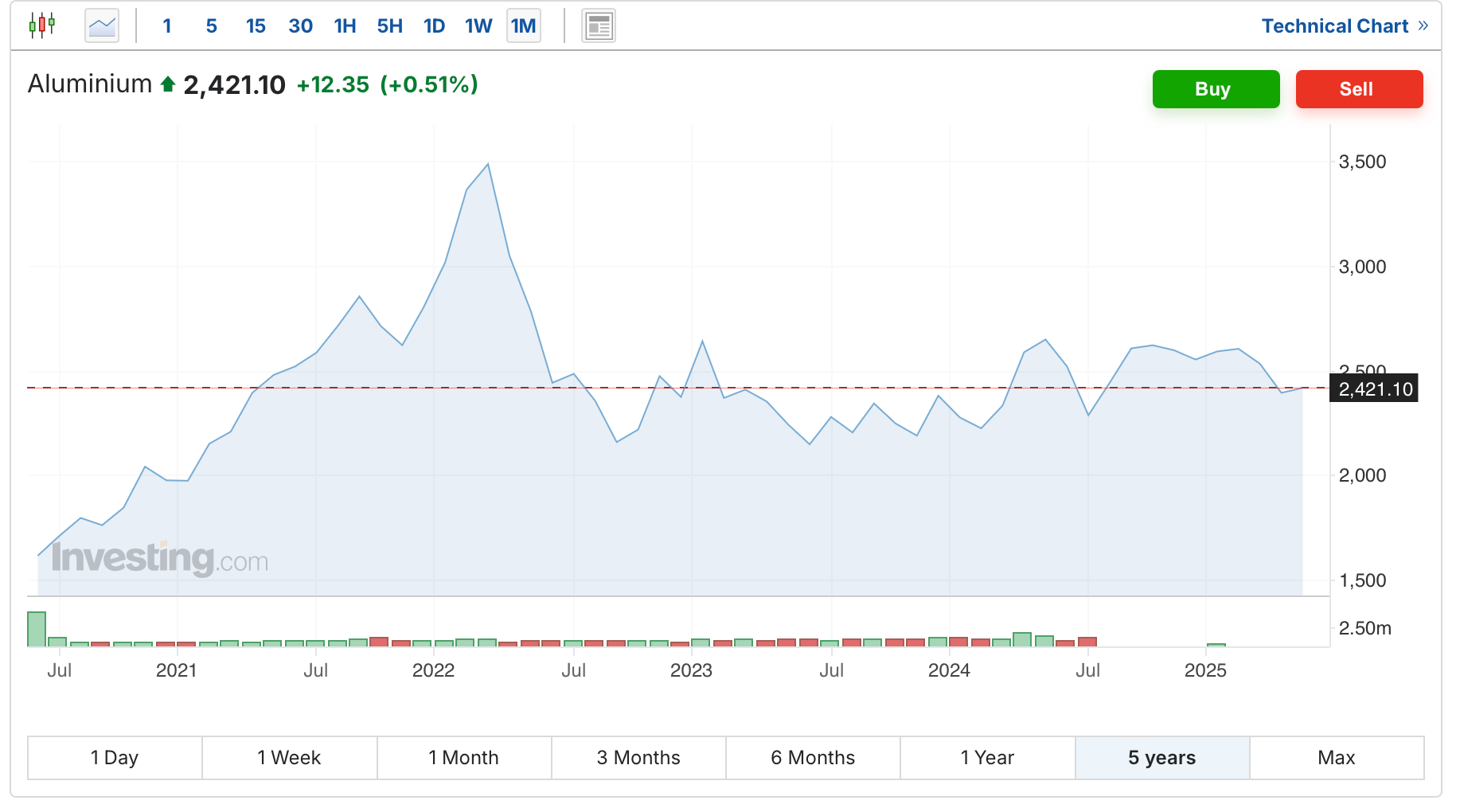
The stock has lost nearly 50% since its November 2024 peak. In a way, Alcoa was the market’s early warning for tariff risk—while most were still assuming it was all campaign noise. Management is still reaffirming this year’s guidance, but raw material cost inflation is a visible risk. Aluminum prices have stayed within the $2,200–2,500 range over the past three years, with a stabilizing trend after the March drop. Alcoa used to trade at $44 under similar aluminum prices, thanks to tight cost control and smart asset acquisitions.
TempusAI — Infrastructure, Not Only AI Narrative
Tempus is often grouped under “AI in healthcare,” but its business model and strategic partnerships suggest something more substantial. In Q1, the company reported:
- Revenue: $255M (+75% Y/Y)
- Adjusted EBITDA: –$16.2M (clear improvement from previous losses)
- Break-even expected by end of 2025
The $200M contract with AstraZeneca—structured over three years—hasn’t yet hit the income statement, but it confirms Tempus is already embedded in critical data infrastructure. SoftBank remains a key backer, offering both capital support and international leverage.
The big question is whether the company can become sustainably profitable, or whether it will stay in “startup mode.” The AstraZeneca contract isn’t exclusive, which means Tempus could scale quickly—if big pharma chooses to outsource this kind of R&D instead of building it in-house.
Tempus is spending heavily on compute infrastructure. That’s not waste—it’s a signal of just how demanding and meticulous AI deployment is in clinical genomics. I believe the fair value of Tempus today sits somewhere around $65–70. After the latest earnings report (which slightly increased guidance by $10M), the stock dropped 12% on the headline, only to be bought back the next day. That says a lot: the market is now watching Tempus closely—not just for hype, but for margin discipline.
You can read my research about Tempus here
FTAI — Cash Flow in a Forgotten Sector
FTAI manages and services aviation engines, particularly for older fleets still flying in emerging markets and budget carriers. It’s not flashy, but it works. And it generates real, repeatable cash flow.
Q1 2025 numbers were solid:
- Revenue: $502M (+13% Q/Q)
- EPS: $0.87 (+180% Y/Y)
- Margins consistently above 20%
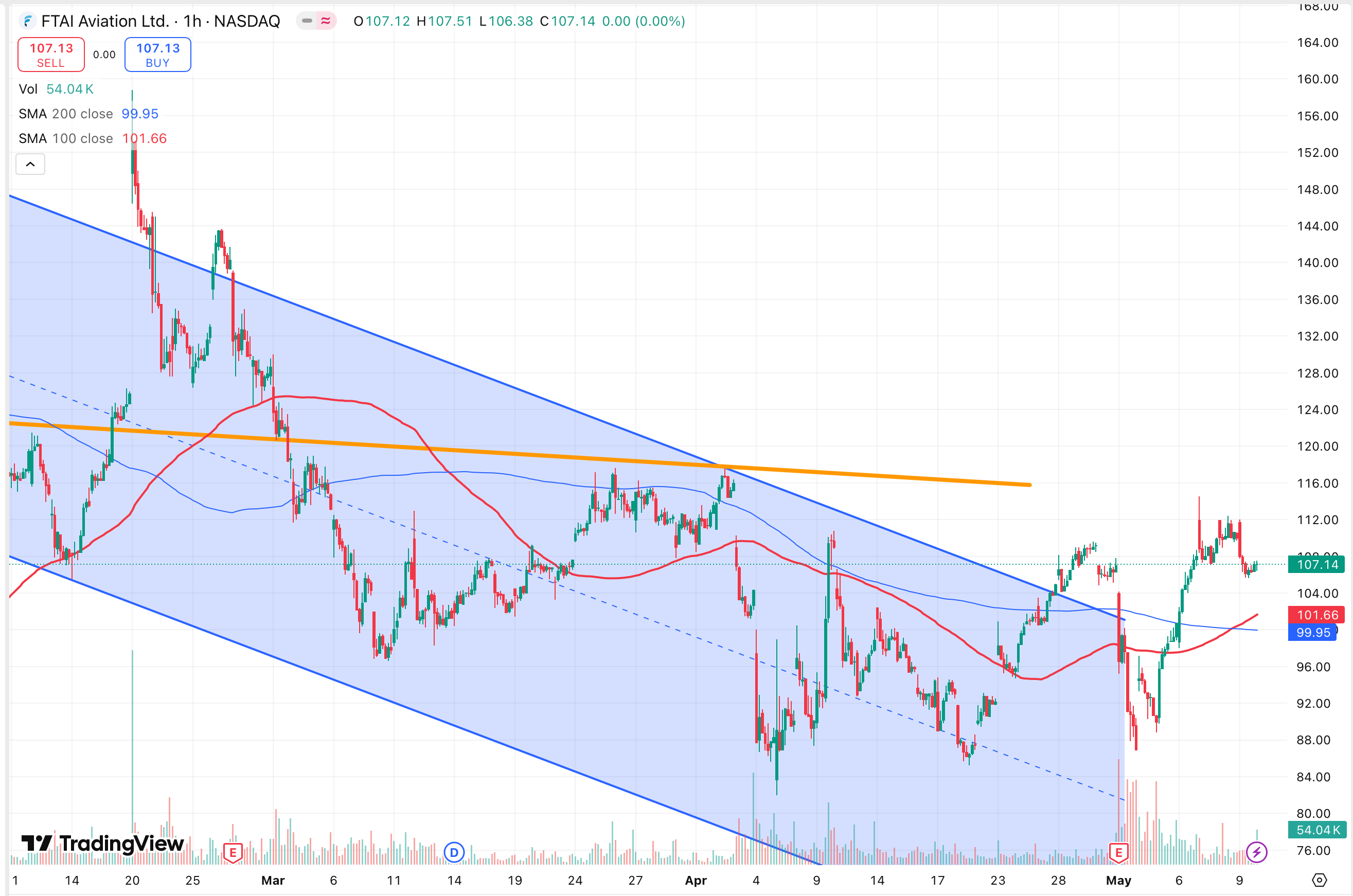
In 2024, FTAI was a top performer—until the music stopped. After a steep run-up, the stock got hit by profit-taking and a short-seller report. Then came the Q2 2024 miss and a 20% drop in a single day. That reset the valuation.
Since then, the company has delivered three strong quarters. Revenues hit the highest level in a year, and most metrics continue to rise. Tariff headlines haven’t really touched this business—it’s not about Boeing or China—it’s about aircraft already flying and needing parts.
Why I bought: I wanted exposure to something with cash flow, less narrative risk, and a strong technical entry after the post-panic rebound. FTAI broke above $98 with volume and didn’t fade. I’m not expecting magic—I’m expecting execution.
As always, this is not investment advice—just a snapshot of how I’m thinking and where I see potential mispricing.
This publication is for educational and informational purposes only and does not constitute financial, investment, or trading advice. Readers are solely responsible for their own investment decisions. The author may hold positions in the securities mentioned.
I do believe that we are about to enter a commodity super cycle and its strength and duration will go beyond imagination.