

EOSE: A Child of Bidenomics, Thriving Under Trump
How a once-subsidized battery startup turned its policy lifeline into a billion-dollar manufacturing engine — and why the trade now depends more on execution than ideology

The surge in demand for industrial batteries didn’t come from a sudden wave of “green energy” enthusiasm — it came from physics. Wind and solar generate power when they want to, not when people need it. Peak generation doesn’t line up with peak consumption, so huge amounts of energy go to waste.
Meanwhile, cities and data centers are overloading aging power grids, and building new transmission lines costs billions. It’s far cheaper and faster to deploy large-scale storage systems that smooth out those peaks and turn intermittent renewables into a controllable resource.
After the Inflation Reduction Act passed in 2022, energy storage became a standalone industry — supported by tax credits, direct subsidies, and a strong push for “made in America” manufacturing.
New segments emerged, from grid-scale installations to backup systems for data centers, which now need self-sufficient energy capacity to power AI workloads. What used to be a niche market has become critical infrastructure.
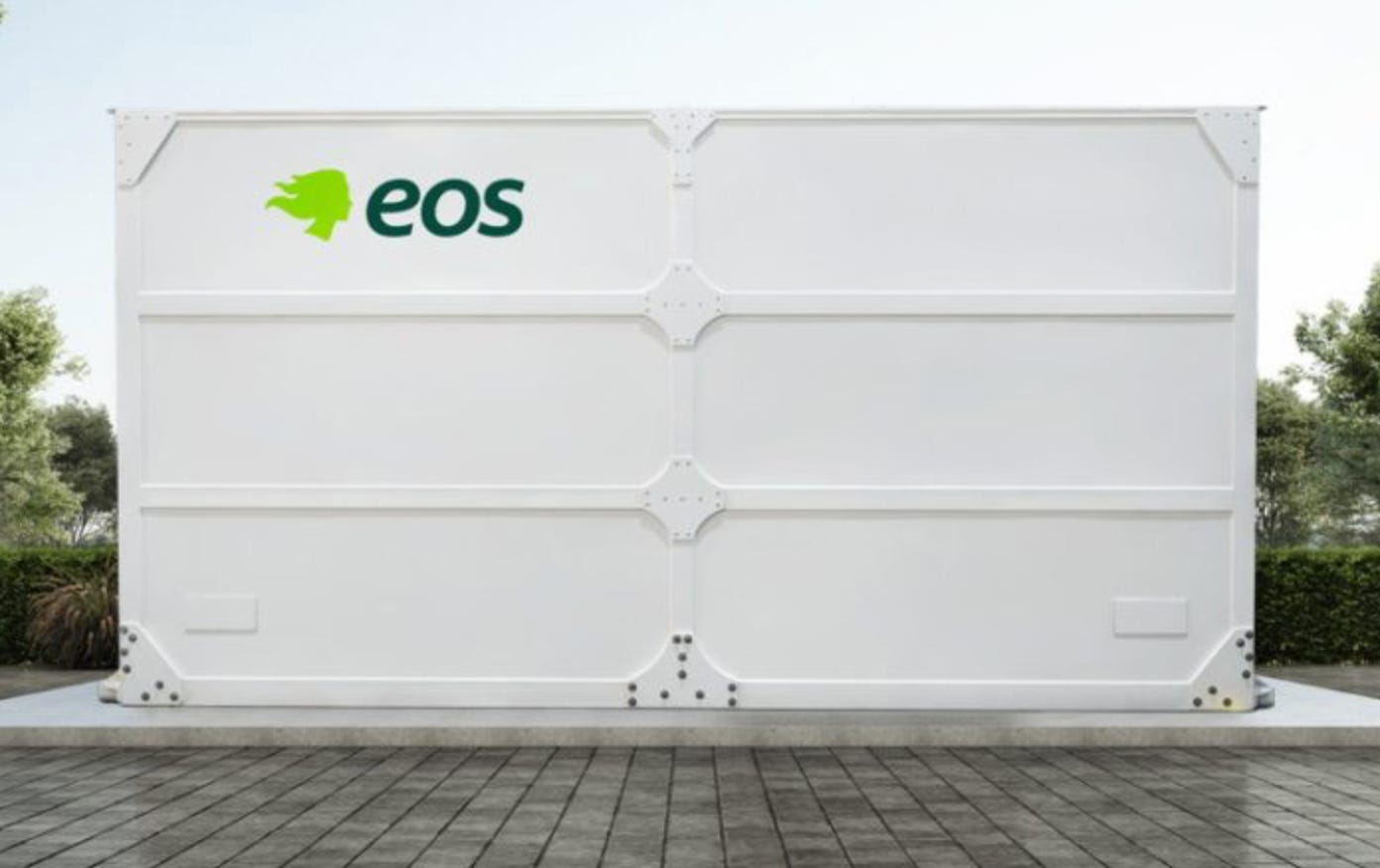
Eos Energy EOSE 0.00%↑ sits right at the center of this shift. The company builds zinc-based, water-electrolyte batteries — not lithium — which makes them safer, nonflammable, and ideal for stationary use. These are precisely the kinds of systems now defining the new energy architecture: bridging renewables, grids, and industrial demand. The stock has gained 232% YTD and now the question is whether it can keep the momentum
Turning production into dollars
The new wave of demand started building in 2024, when the U.S. power grid collided with the AI boom. Every new data center meant tens or hundreds of megawatts of continuous load — and utilities weren’t ready for that. Nvidia’s chips may have been the symbol of the AI rush, but behind every GPU cluster came a scramble for energy storage. Battery systems suddenly became not just a green transition tool, but the backbone of digital infrastructure.
At the same time, the Inflation Reduction Act kicked into full effect, offering stackable production and investment tax credits — $35 per kilowatt-hour for battery cells, another $10 for modules, and 10% for electrode materials. It made domestic manufacturing profitable for the first time in history. For EOS that meant every gigawatt-hour of production could generate tens of millions in tax credits, directly monetizable at a 10% discount through 2029.
Then came the FEOC restrictions — Washington’s quiet reshaping of the supply chain to exclude Chinese-made components. That single clause forced utilities and developers to seek American-made systems fast, before the deadlines. For companies like $EOSE, sourcing over 90% of materials domestically, it created a perfect window. Demand wasn’t just growing — it was being redirected toward them.
Keep reading with a 7-day free trial
Subscribe to Edge of Power to keep reading this post and get 7 days of free access to the full post archives.