


The market has quietly shifted into a new phase. Big Tech is back in favor — and the new favorite is Google, which jumped today on reports that Anthropic runs more efficiently on its chips than ChatGPT does on Microsoft Azure and $NVDA
In other words, Google now represents both the cloud and the chip layer — the only ecosystem so far capable of challenging Nvidia’s dominance.
I use Claude myself, and I can say it performs much better than ChatGPT — but it’s also much more expensive. For the standard $20 plan, the limits are reached very quickly, and the next tier starts at $100. I’m not complaining — the issue isn’t the price, it’s that quality now costs significantly more, while ChatGPT’s performance has visibly declined. Google, on the other hand, has achieved impressive results.
What does this teach investors, and why am I writing this note? First, major companies — unless it’s Apple — always find a way to secure their place in the AI race. Google has undergone a massive transformation, both in search and with Gemini, to reach that long-awaited $300 target. Rumor has it Apple is also preparing something big — possibly a robot-camera.
Bitdeer spoiled the party
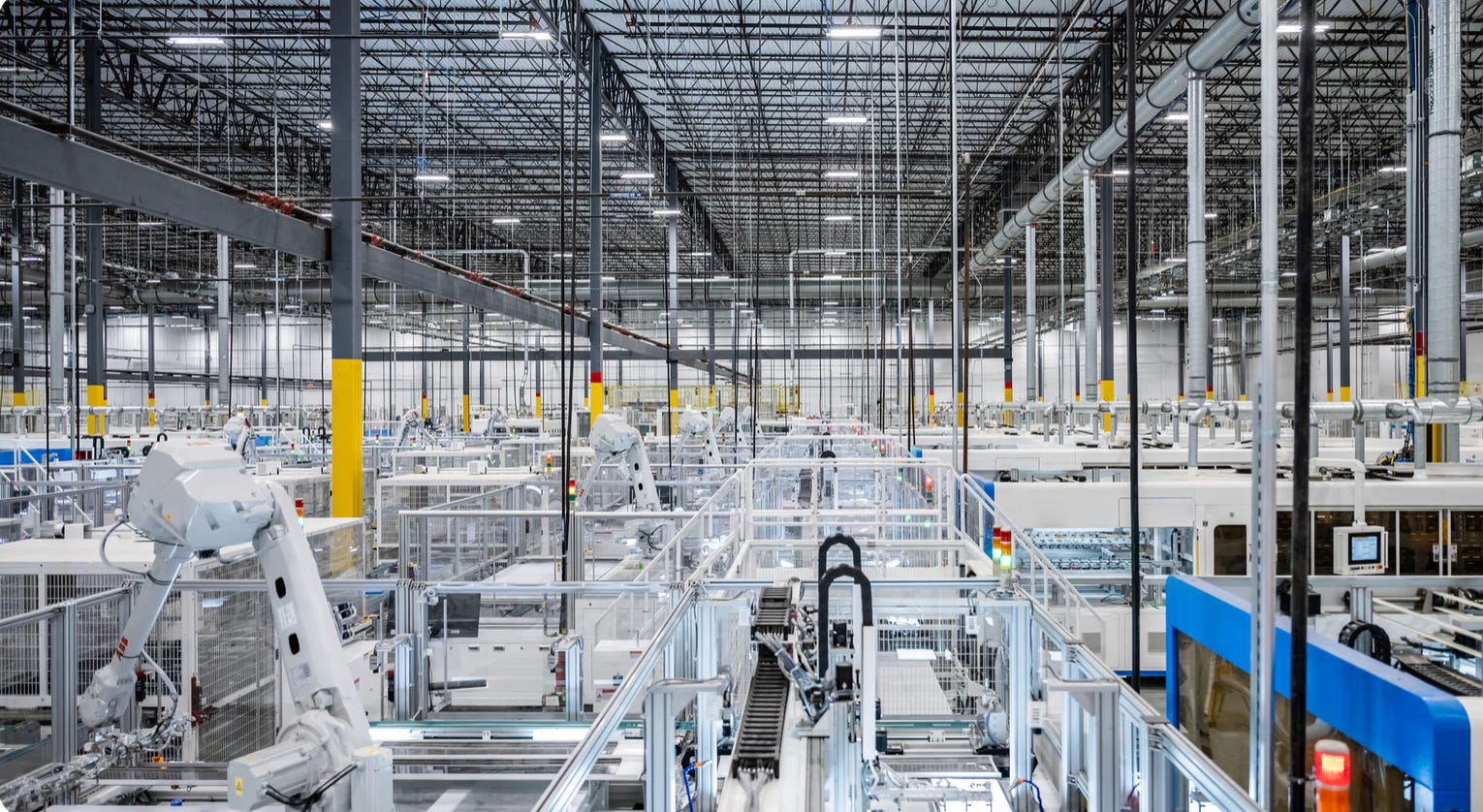
I also noticed that investors started selling miners today after Bitdeer’s mixed report. The market may be taking a breather from the NeoCloud/miner stocks ahead of Nebius’s earnings tomorrow. There’s strong demand for EOSE, which hit new highs after management’s promise to ramp up production — boosting shares of another promising energy-storage player, T1 Energy.
Storage stocks rip
Storage names like WDC and Seagate also got a lift from analysts. Seagate, already up significantly this year, now has an additional upside of around 50%. AI requires enormous data storage capacity, and that’s driving investment not only in infrastructure but in everything that keeps it running. JPMorgan estimates the next five years could require $5–7 trillionin total investment — capital that will flow into both builders and enablers.
Many stocks have entered a new dimension — think Vertiv at $190 or Micron at $250. The case of CRWV shows the market’s focus clearly: it rewards anyone who can profit from AI, not just direct beneficiaries. But being a leader isn’t enough anymore — the market now demands proof of profitability. And today, CRWV failed to deliver that.
CoreWeave disappoints. As always
Despite the flashy headline numbers, CoreWeave’s Q3 report reveals a harsh reality under the surface. Revenue nearly tripled year-over-year to $1.36 billion, but operating expenses exploded to $1.31 billion, up from $466.8 million a year ago.
That left just $51.9 million in operating income — a paper-thin 4% operating margin, collapsing from 20% in Q3 2024. In other words, almost every dollar earned is being eaten by costs — infrastructure build-outs, hardware depreciation, and power expansion.
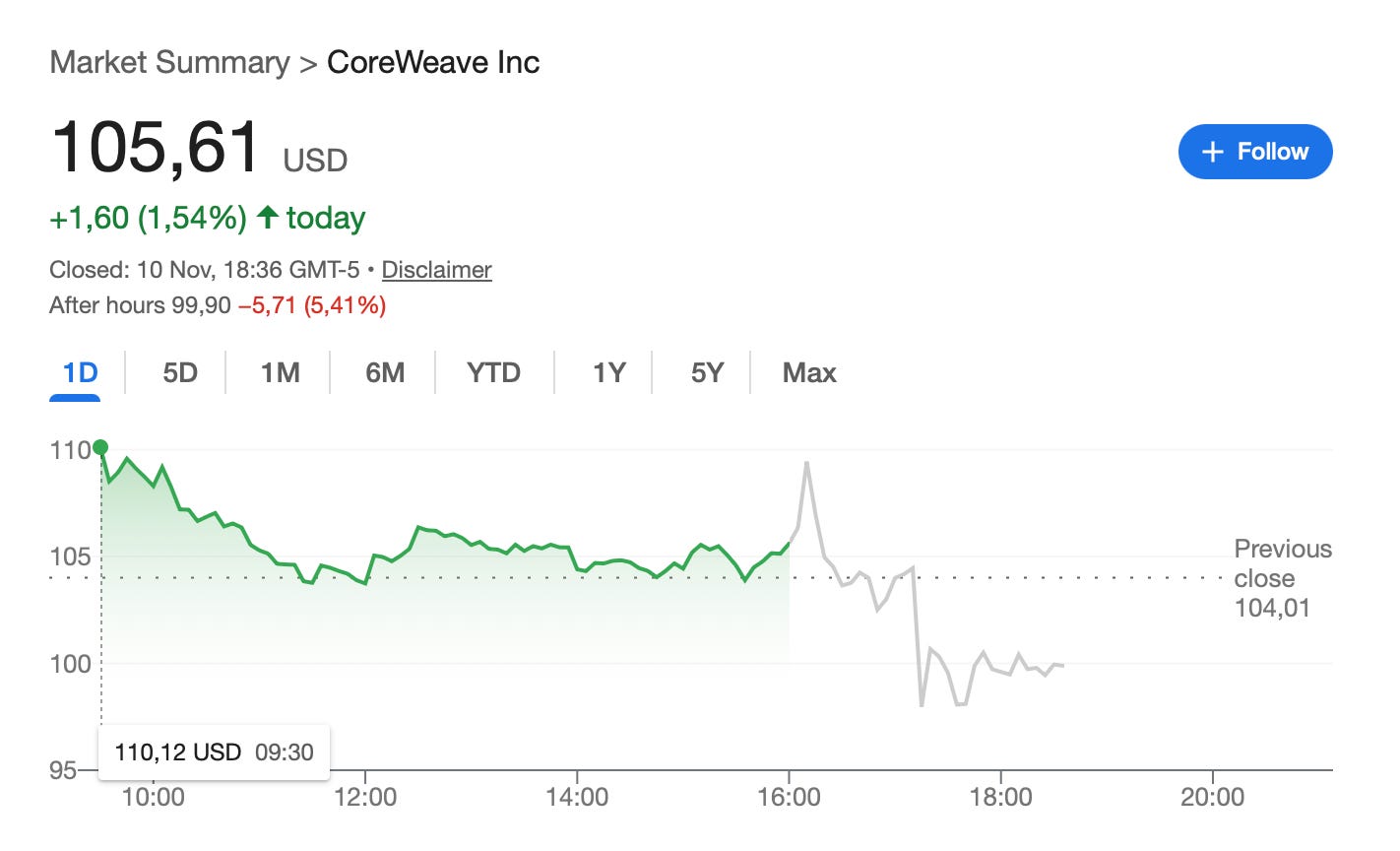
Net loss narrowed to $110 million, an improvement from last year’s $360 million, but the business is still far from profitability. The bright spot is the $55 billion backlog, almost double last year’s level, showing that demand for AI compute remains red-hot.
However, the numbers paint a clear picture: growth is still being bought, not earned. CoreWeave may be scaling fast, but it’s doing so on razor-thin margins. Until that operating leverage starts to show, the market will treat it as a volume-driven story with little bottom-line traction.

And for us, the takeaway from the CRWV story is very simple — a company with cutting-edge technology failed to manage its own growth and is now falling under the weight of heavy debt and production issues.
Facts not promises
The market is increasingly rewarding companies that can actually afford what they build. My advice is this: follow the money — and if the money isn’t there yet, follow operational discipline. Because once a company masters production, it moves into a different league — exactly what happened with EOSE. The key is for management to keep its promises.
The market is running high right now, so it’s better to act during pullbacks. Volatility is likely to stay elevated until the end of the year — and that’s a good opportunity to trade the swings.
This publication is for educational and informational purposes only and does not constitute financial, investment, or trading advice. Readers are solely responsible for their own investment decisions. The author may hold positions in the securities mentioned.