

Data centers have become one of the clearest symbols of this AI-driven market. Growth is rapid, priorities are shifting, and every company touching infrastructure is pulled into a cycle of rising expectations, political energy concerns, and investor fears of overspending. What used to be a simple mining sector now operates inside a much larger AI bubble that forces miners, hyperscalers, and utilities to compete for the same limited supplies of power and land.
The transformation is visible everywhere. Former miners moved from selling hashpower to building industrial campuses that support training clusters for Google, Microsoft, and Amazon. They did it because demand for power and cooling arrived faster than traditional data center developers could respond. Their pipelines expanded to levels few expected. Cipher Mining is one of the clearest examples, with a contracted and planned development portfolio that now spans more than 3 gigawatts. This scale was not even part of the conversation a year ago.
The sector is also entering a period defined by new arguments. Every discussion now revolves around one question: should companies lease out megawatts through colocation, or should they deploy their own bare-metal compute and sell GPU hours directly. Both paths are viable, but they reflect different views of risk, capital intensity, and the durability of the AI boom. These debates show where the industry is heading and what investors fear most: the risk that buildout moves faster than demand, or that capital is deployed into assets that saturate before they generate returns.
Miners did not disappear. They adapted to the incentives of the moment. Their speed of construction, access to cheap power, and presence in markets like West Texas allowed them to pivot into a role that traditional operators were too slow to fill. The result is a new class of infrastructure companies that look less like old-cycle miners and more like hyperscale-adjacent developers that supply the physical backbone of AI.
How Texas was won
Power is the bottleneck in the AI and compute economy. Demand for electricity from AI data centers is growing much faster than the U.S. grid can expand. Morgan Stanley estimates a possible 13 to 44 gigawatt shortfall by 2028, equal to the energy use of more than 33 million American homes, if new capacity is not added quickly. Analysts describe AI load growth as non-linear. The grid is struggling to keep up.
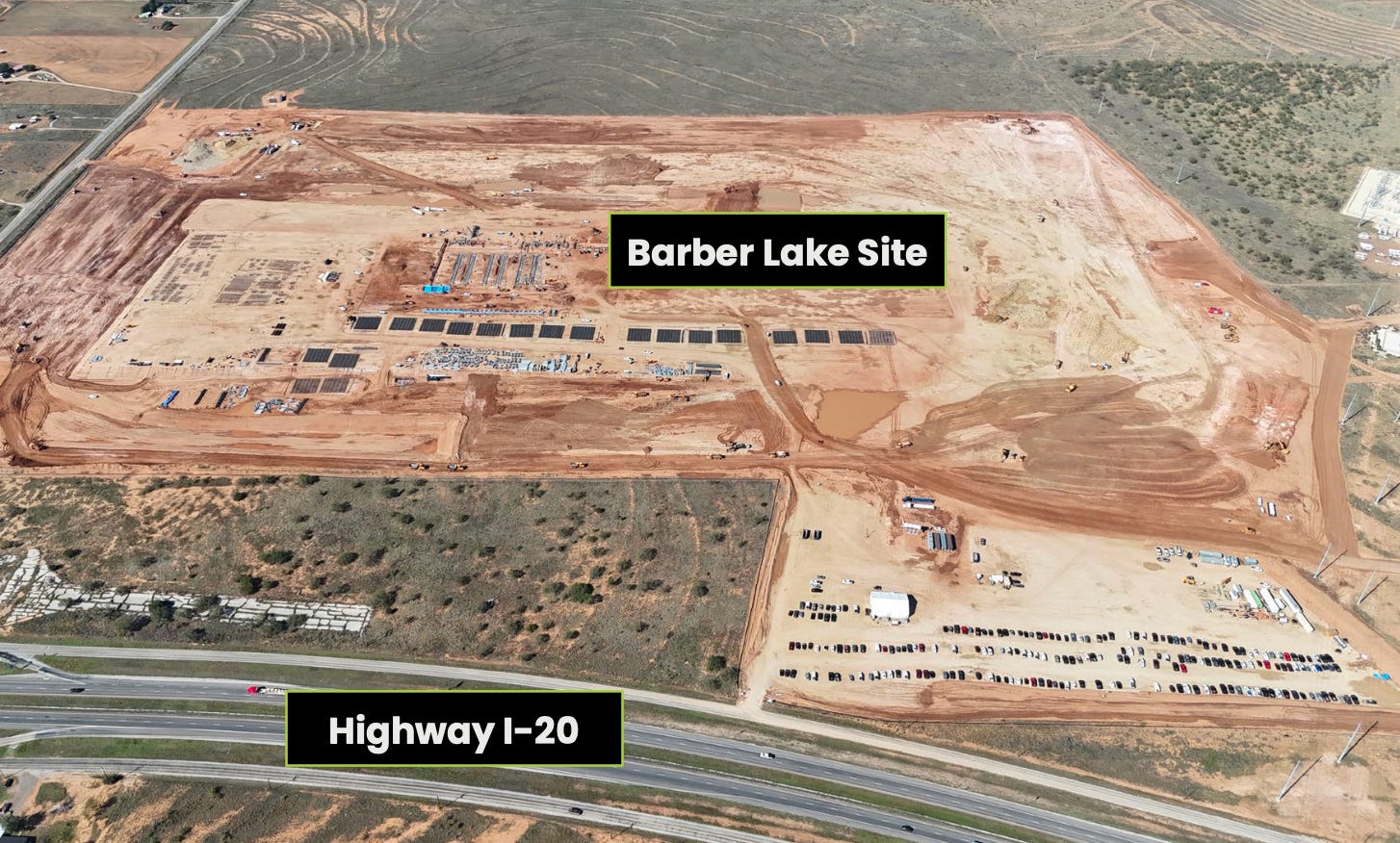
This pressure explains why the first wave of companies that moved into large-scale Texas development were not traditional data center operators. It was the Bitcoin miners. Firms like IREN, Cipher Mining, Core Scientific, Riot, and Marathon realized earlier than anyone else that power availability was about to become the defining constraint. They entered West Texas long before hyperscalers because their business model depended on two things the region could deliver better than any other part of the United States: abundant energy and fast interconnection paths.
Bitcoin miners went to Texas for structural reasons:
• They needed cheap, scalable power for high-density workloads.
• They were willing to build in remote locations where traditional developers refused to go.
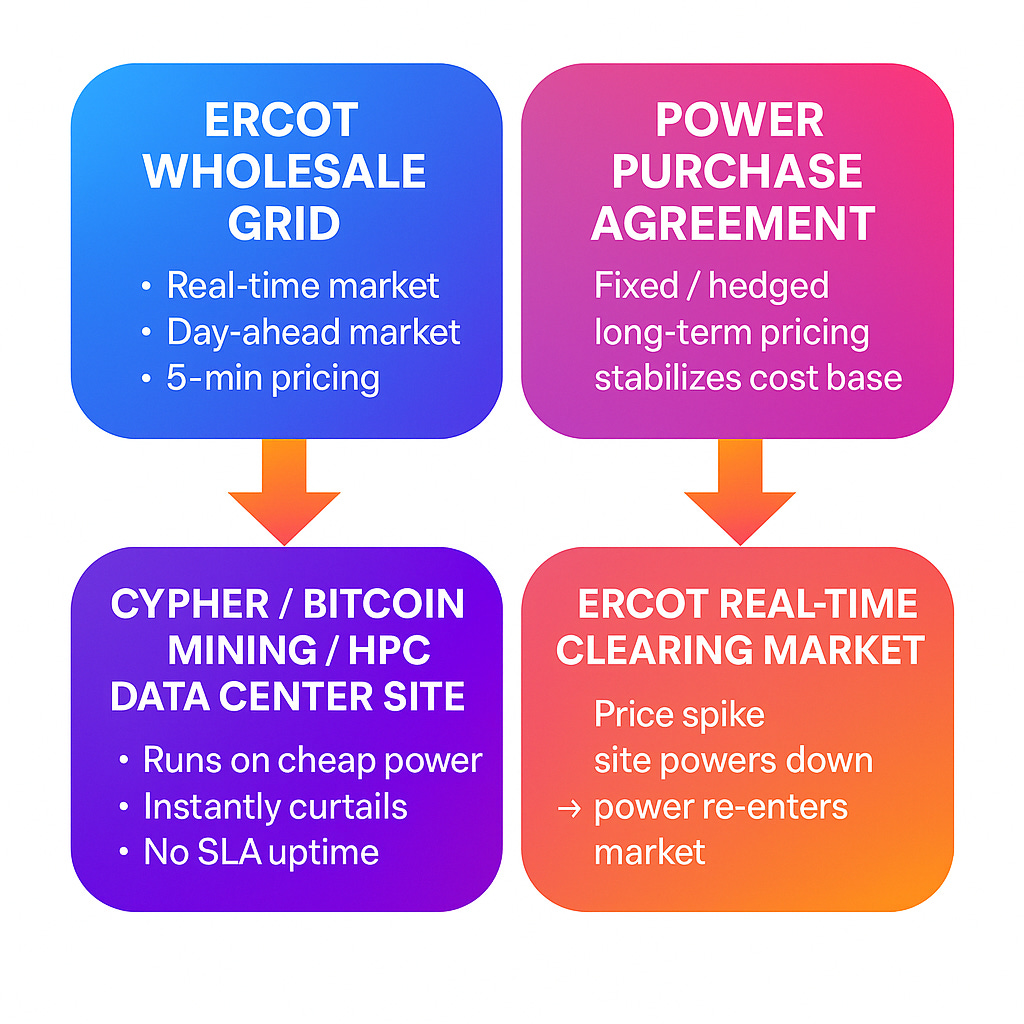
• They could tolerate volatility because their machines can turn on and off instantly.
• They understood that ERCOT rewards flexible, interruptible load far more than guaranteed uptime.
• They were able to monetize price spikes by curtailing and selling power back into the market.
These companies effectively became the early pioneers of large flexible load development. They acquired land next to substations. They built high-capacity transmission connections. They learned ERCOT’s operating rules before the AI boom made the region crowded. By the time hyperscalers entered Texas, miners already controlled some of the best interconnection positions in the state.
Texas built its own electric system called ERCOT, and its structure is the reason miners and AI compute companies choose it over every other region.
How ERCOT works:
• Independent grid. ERCOT is not part of the federal interstate grid, so projects avoid long federal approval timelines.
• Real-time pricing. Power prices move every five minutes, allowing large loads to optimize or curtail based on conditions.
• Day-ahead market. Operators can hedge and model their power costs more precisely.
• Large flexible loads. ERCOT welcomes big interruptible customers, which matches perfectly with mining operations.
• Fast interconnection. ERCOT is faster at approving load than PJM, MISO, CAISO, or NYISO.
• High renewable penetration. Texas produces massive amounts of wind and solar, creating cheap off-peak power windows.
• Curtailment revenue. Operators can shut down during peak pricing and sell back power to the grid, generating profit instead of absorbing losses.
But ERCOT alone is not enough. The missing link between volatility and a stable long-term business model is the PPA.
What PPA is:
A Power Purchase Agreement is a long-term contract that locks in electricity at a fixed or predictable price. In a volatile market like ERCOT, PPAs are essential. They turn unpredictable pricing into a stable cost structure.