

Apple, Trump, and the End of Corporate Neutrality
Apple’s biggest risk isn’t AI anymore — it’s Washington. Trump’s 25% tariff threat isn’t about trade. It’s a message: No more corporate neutrality. You’re either aligned — or you’re next.

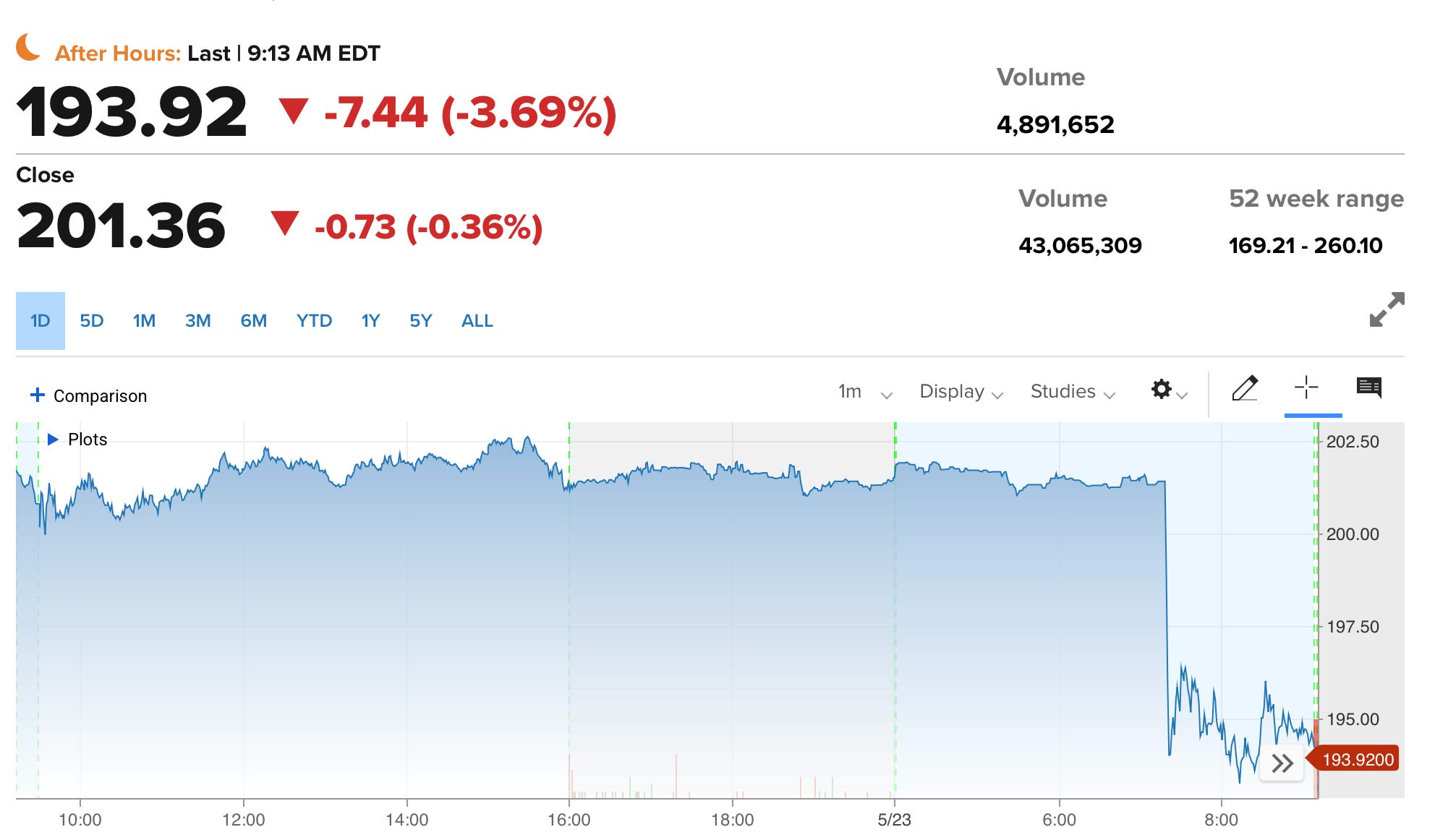
Trump’s administration is preparing a 25% tariff on Apple’s China-assembled iPhones sold in the U.S.
This isn’t symbolic.
It’s the beginning of a policy shift that will force multinational corporations to reprice globalization — and rethink operational exposure to Washington’s agenda.
This piece breaks down what’s at stake economically, not politically.
1. Apple: Frontline Exposure
Apple is uniquely vulnerable:
95%+ of iPhones are assembled in China.
Apple doesn’t own its factories — it leases scale via Foxconn, Pegatron, etc.
No short-term way to “repatriate” production without massive cost inflation and multi-year CapEx.
Economically, this means:
Margins will compress if Apple eats the tariff.
ASPs (average selling prices) will rise if they pass it to consumers.
Either way, unit volumes drop, and that bleeds into Services.
Until now, the market saw Apple’s biggest risk as lagging in AI.
Now it turns out the real threat is political — and existential.
Also worth remembering:
Tim Cook donated $1 million to Trump’s inauguration in 2017.
It didn’t buy insulation — and it won’t this time either.
2. The Real Story: Apple Is Just First
Apple is not the target.
It’s the test case — the highest-profile company to force a precedent.
The market should assume:
Consumer electronics will be next. (Dell, HP)
Automotive could follow. Especially EVs with Chinese supply chains.
Cloud and AI hardware — like Nvidia’s reliance on Taiwanese and Korean fabs — will eventually be questioned.
Economically, this is a move toward controlled reindustrialization through pressure.
3. Capital Allocation Under Coercion
Companies now face a new calculus:
Keep margins and scale overseas — or start redirecting CapEx to U.S.-based operations as insurance.
This has downstream effects:
Onshore CapEx = lower ROI, lower IRR, more regulatory exposure.
It benefits contract manufacturers with U.S. facilities — not tech giants who’ve spent 20 years optimizing for asset-light models.
Expect:
Cash stockpiling to increase.
Short-term margin guidance to weaken.
Reallocation away from high-growth but geopolitically exposed product lines.
This is a reversal of 30 years of globalization economics.
4. Political Capital = Risk Premium
The U.S. government is no longer a policy partner — it’s becoming a pricing risk.
The market must now account for:
Sudden regulatory threats,
CapEx reorientation not driven by ROI,
Executive-level political exposure.
And no donation guarantees protection.
Just ask Zuckerberg — who also spent big in D.C., only to find himself cornered in an antitrust trial while TikTok gained market share with zero domestic infrastructure.
What we’re watching is a new form of capital mispricing:
Political exposure that isn’t listed on the balance sheet — but moves the stock.
5. Investment Implications
Short-term: Expect elevated volatility in mega-cap tech.
Apple will lead, but Amazon, Google, and Tesla will follow as manufacturing scrutiny intensifies.Medium-term: Look for outperformance in:
Onshore manufacturers (Flex, Jabil)
Industrial REITs tied to U.S. logistics
Defense stocks (stable under Trump policy)
Long-term: Expect a bifurcation:
Companies that politically align and adapt may trade at a premium.
Neutral or foreign-exposed companies may stagnate despite strong financials.
Conclusion:
The assumption that the U.S. government and the U.S. stock market serve the same long-term goals is breaking down.
Apple is the first casualty of this divergence. It won’t be the last.
What we’re seeing is not an isolated tariff threat — it’s the reintroduction of political loyalty into capital pricing.
This publication is for educational and informational purposes only and does not constitute financial, investment, or trading advice. Readers are solely responsible for their own investment decisions. The author may hold positions in the securities mentioned.